
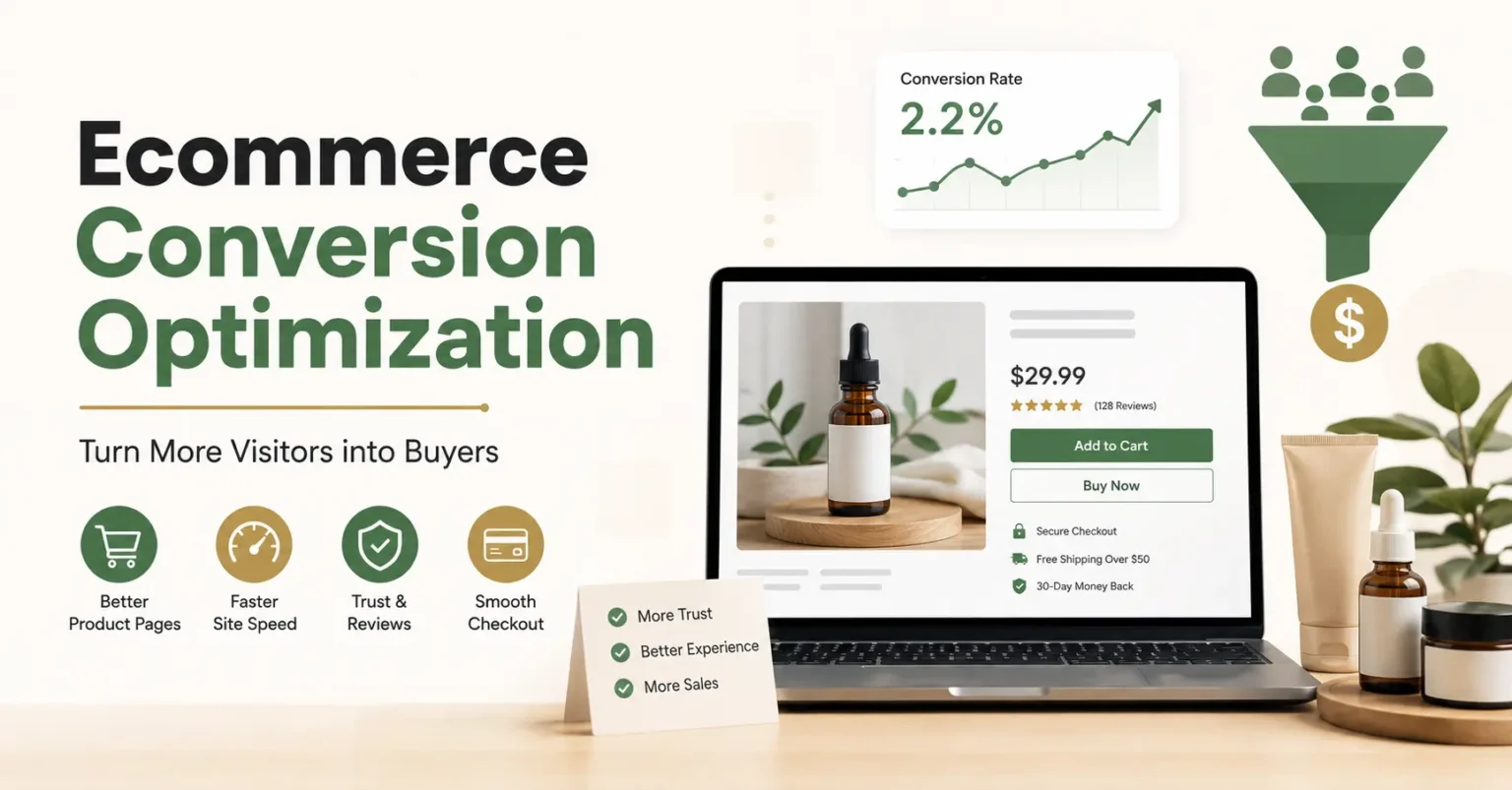
So a couple years back I launched a small skincare line online, nothing fancy, just a handful of products I’d been making in my kitchen for months before finally putting them up for sale. Traffic was actually decent from day one, people were finding the site, but almost nobody was buying anything. That’s when I got obsessed with ecommerce conversion optimization, mostly out of pure frustration honestly, staring at analytics that showed hundreds of visitors and barely any sales to show for it.
Why Ecommerce Conversion Optimization Became My Obsession
I’ll be honest, I didn’t even know this term existed at first. I just knew something was broken. People were clicking on my ads, landing on my site, scrolling around, and then leaving without buying anything. Felt like watching money walk out the door every single day.
The Numbers That Scared Me
I remember pulling up my analytics one night and seeing my conversion rate sitting at something like 0.4 percent. At the time, I didn’t even know what a good number looked like, so I Googled it around eleven at night. The results showed that decent stores typically reached somewhere between two to three percent, and honestly, my stomach dropped because I was nowhere close.
Traffic Wasn’t the Problem
My first instinct, honestly the wrong one, was to throw more money at ads thinking I just needed more eyeballs. A friend who’d run a few online stores before talked me out of that pretty quickly. She basically said, more traffic to a leaky bucket just means more water on the floor. That stuck with me. I needed to fix the bucket first, not just pour more in.
Fixing the Product Page First
This is where I actually started, mostly because it felt like the most obvious place people were dropping off.
Photos and Trust Signals
My original product photos were taken on my kitchen counter with my phone, decent lighting but nothing that screamed professional or trustworthy. I ended up redoing them with a simple lightbox setup, added some texture shots showing the actual product close up, and honestly that alone changed how the site felt. I also added little trust badges near the buy button, secure checkout icons, that kind of thing. Sounds small but people genuinely hesitate buying skincare from a brand they’ve never heard of without some visual reassurance.
Shortening My Descriptions
My product descriptions used to be these long paragraphs about ingredients and my personal story behind the brand. Nice to read maybe, but people were bouncing before getting through it. I cut everything down to short, scannable bullet points up top, key ingredients, what it’s for, how it feels on skin, and moved the longer brand story further down for people who actually wanted to read it.
Checkout Was Quietly Killing Sales
This part honestly surprised me the most once I dug into it properly.
Too Many Steps
My original checkout had something like five separate steps, account creation required before you could even check out. I found this out by literally watching a recording of someone using my site, one of those heatmap and session recording tools, and watching them abandon right at the account creation screen was honestly painful to sit through. I switched to allowing guest checkout immediately after that, no question.
Surprise Costs
Shipping costs were another quiet killer. I wasn’t showing shipping fees until the very last step, and people were clearly bailing once they saw an extra eight dollars tacked on at checkout. I started showing estimated shipping earlier in the process, right on the product page actually, and that single change noticeably reduced my cart abandonment within the first month.
Site Speed Mattered More Than I Expected
I genuinely didn’t think this would matter as much as it did until I actually tested it.
My site was loading in around six seconds on mobile, which honestly didn’t feel that slow to me sitting there testing it myself on good wifi. But I read somewhere that even a one second delay can tank conversions noticeably, so I had a developer friend look at it. Turned out my product images were massive uncompressed files, slowing everything down without me even realizing it. Once those got optimized, load time dropped under two seconds, and weirdly enough my bounce rate dropped along with it.
Social Proof and Reviews
This one took some convincing on my part honestly, felt a little gimmicky at first.
I started actively emailing customers a week after delivery asking for honest reviews, even offering a small discount code as a thank you for leaving one. Within a couple months I had maybe thirty reviews scattered across my products, and I started noticing something interesting, the products with more reviews were converting noticeably better than the ones without any. People genuinely seem to need that reassurance from other actual buyers before trusting a small unknown brand with their money.
Testing Small Changes Instead of Big Overhauls
Something I learned the hard way, changing five things at once tells you nothing useful.
Early on I’d redesign entire pages overnight based on a hunch, then have no idea which specific change actually helped or hurt. Once I started doing simple A/B tests, one button color, one headline, one price display format at a time, I actually started learning what my specific audience responded to instead of just guessing based on what worked for some random blog post I’d read.
What I’d Tell Someone Starting Out
If you’re staring at low conversion numbers right now feeling overwhelmed, honestly start with checkout first. That’s where I saw the fastest, clearest improvement, and it’s usually a smaller fix than redesigning your whole product page.
Also, actually watch real people use your site if you can. Session recordings genuinely taught me more in one afternoon than weeks of reading articles about ecommerce conversion optimization ever did. Watching someone get confused or frustrated in real time shows you exactly where things are breaking down, way more clearly than guessing ever could.
Final Thoughts
Looking back, my conversion rate eventually climbed up to around two point two percent after a few months of steady, small changes, nothing dramatic happened overnight, just consistent little fixes adding up over time. If you’re dealing with decent traffic but barely any sales, I’d genuinely encourage you to dig into ecommerce conversion optimization properly instead of just throwing more ad spend at the problem like I almost did. Fix the checkout, clean up your product pages, show real reviews, and actually watch how people use your site. It worked for my little skincare shop, slowly but surely, and I think it can work for yours too.