
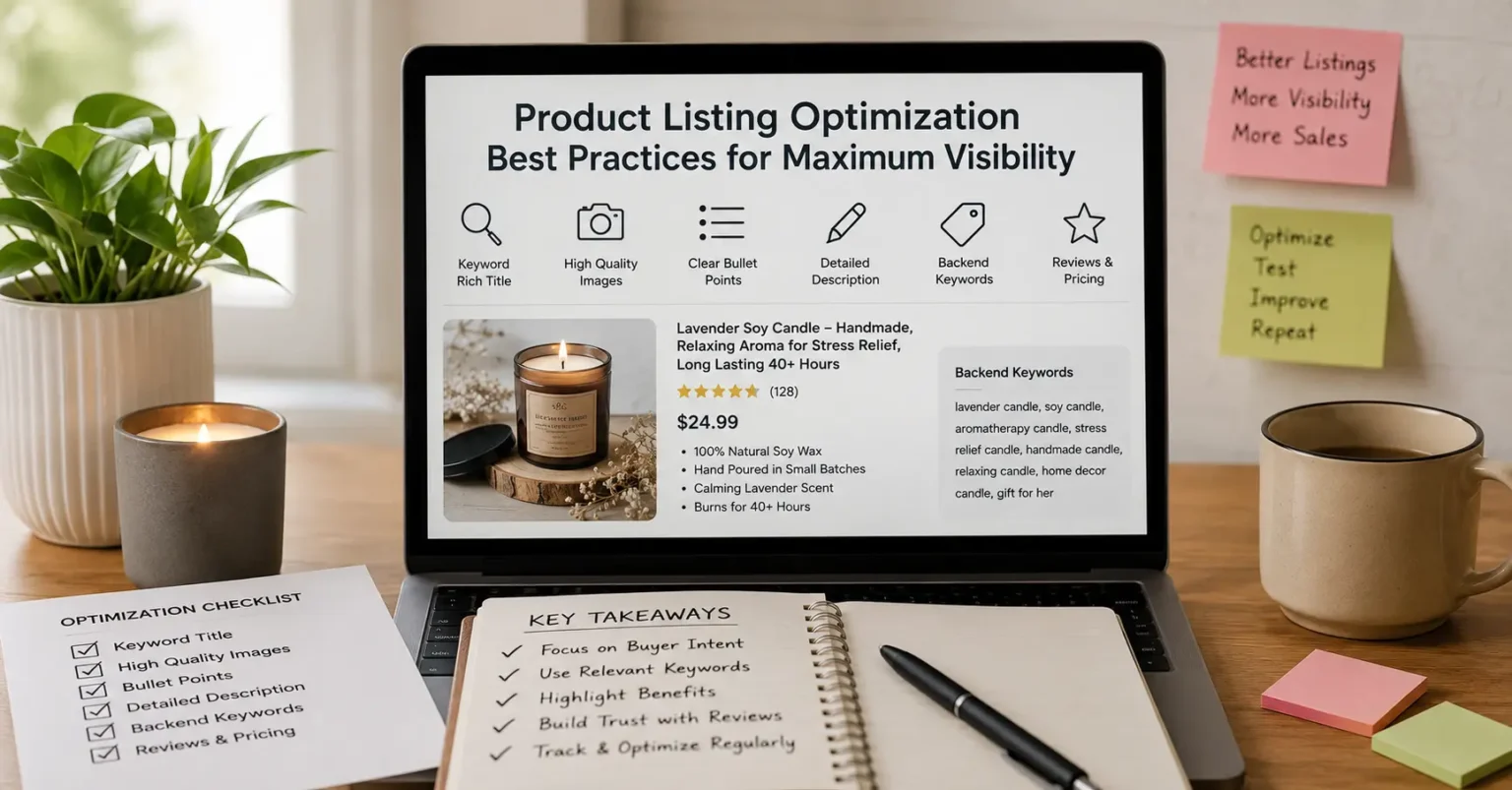
So I run a small online shop, mostly handmade candles and a few home decor pieces, and for the first year honestly my listings were a mess. I just threw up some photos, wrote whatever description came to mind, and wondered why barely anyone found my products. Turns out product listing optimization is basically the difference between your stuff sitting invisible on page five and actually showing up where buyers are looking. Took me embarrassingly long to figure that out, but once I did, things changed a lot.
Why Product Listing Optimization Actually Matters
I’ll admit, when I first heard the phrase product listing optimization thrown around in some Facebook seller group, my eyes kind of glazed over. Sounded like one of those buzzwordy things people say to sell courses. Turns out it’s actually just common sense stuff, dressed up in marketing language, but the impact is real once you start applying it properly.
The Wake Up Call
I remember checking my shop analytics one slow month and seeing my candles barely getting any impressions at all. Like, almost nobody was even seeing them in search. I assumed the algorithm was just being unfair to small sellers, classic excuse honestly. Then a friend who’d been selling online way longer than me looked at my listings for two minutes and immediately pointed out my titles were basically useless. No keywords, just cute names like Moonlight Dreams Candle. Nice name. Zero searchability.
What Changed Once I Took It Seriously
Once I actually rewrote my listings properly, within a few weeks my impressions jumped noticeably. Nothing magical happened overnight, but the difference between a poorly optimized listing and a properly done one was honestly bigger than I expected going in.
Quick thing I learned early, product listing optimization isn’t a one time task. I revisit my titles and photos every few months because search trends shift, and what worked last season sometimes quietly stops working.
Getting the Title Right
This is where I’d tell anyone to start if they’re serious about product listing optimization. Your title is doing more work than almost anything else on the listing page.
Keyword Placement Without Sounding Robotic
The trick I learned, and it took some trial and error, is putting your main keywords toward the front of the title without making it read like complete gibberish. My old title was Moonlight Dreams Candle, just that. My new one became something like Lavender Soy Candle Handmade, Moonlight Dreams Scented Candle for Relaxation and Stress Relief. Clunky to read out loud, sure, but it covers what people are actually typing into the search bar, which is the whole point.
Mistakes I Made With Titles
I went a little overboard at first honestly, stuffed way too many keywords in there and the title became almost unreadable, just a wall of words. Took feedback from a couple customers who mentioned it looked spammy before I dialed it back. There’s a balance, searchable but still something a human would actually want to read and trust.
Photos Matter More Than You Think
I genuinely underestimated this part for way too long. I figured decent lighting and a clean background was enough.
What I Learned From Testing Different Images
I started swapping my main photo every few weeks just to see what happened to click rates. Plain white background shots performed fine but honestly boring. The listings that did noticeably better had a lifestyle shot as the main image, candle actually lit, sitting on a cozy looking shelf with some books nearby. Made buyers picture it in their own home instead of just seeing a product floating on a blank background. Small change, real difference in clicks.
Writing Bullet Points and Descriptions That Actually Convert
This part took me embarrassingly long to get right too. I used to just describe the product, dimensions, scent notes, burn time, basic stuff like that.
Speaking to the Customer’s Problem
What actually worked better was shifting the language toward what the customer gets out of it, not just what the product technically is. Instead of just listing burn time as a fact, I started writing things like, burns for over forty hours so you get weeks of cozy evenings without constantly repurchasing. Same information basically, but framed around the actual benefit instead of just a dry spec sheet. People respond to that way more than I expected.
Backend Keywords and Search Terms
This is the part nobody talks about enough honestly, the hidden keyword fields most platforms give you that customers never even see directly.
I used to leave this section half empty, didn’t think it mattered much. Big mistake. These backend fields are basically free real estate for extra search terms you couldn’t naturally fit into your title or description. Things like alternate spellings, related search terms, even seasonal keywords during certain times of year. Filling this out properly genuinely helped my products show up for searches I wouldn’t have thought to target directly in the visible text.
Pricing and Reviews Tie Into Visibility Too
Something I didn’t expect going into all this, pricing and review count actually influence how visible your listing becomes, not just how appealing it looks once someone finds it.
Most marketplace algorithms seem to favor listings with decent review counts and competitive pricing, pushing them higher in search results. I noticed once I started actively asking happy customers to leave reviews, even just a polite follow up message, my listings started climbing a little in search rankings, separate from any changes I made to the actual text or photos. Wasn’t something I expected to matter for visibility specifically, but it clearly does.
If you’re just starting out, don’t try to fix everything at once. Start with your title and main photo first, those two alone made the biggest visible difference for me early on.
Also, keep a simple spreadsheet tracking your changes and the dates you made them. Without that I couldn’t tell which tweak actually moved the needle, I just had a vague sense things were improving.
Final Thoughts
Looking back, I really wish someone had explained product listing optimization to me in plain, practical terms instead of letting me stumble through all of this on my own through trial and error. It’s not some complicated technical skill, honestly, it’s mostly about thinking from the buyer’s perspective and making sure your listing actually speaks their language, in search terms and in tone. If your products feel invisible right now the way mine did that first year, start with your titles, fix up your main photo, and don’t ignore those backend keyword fields either. Small, steady changes added up way more than I expected, and I think they will for your listings too.