
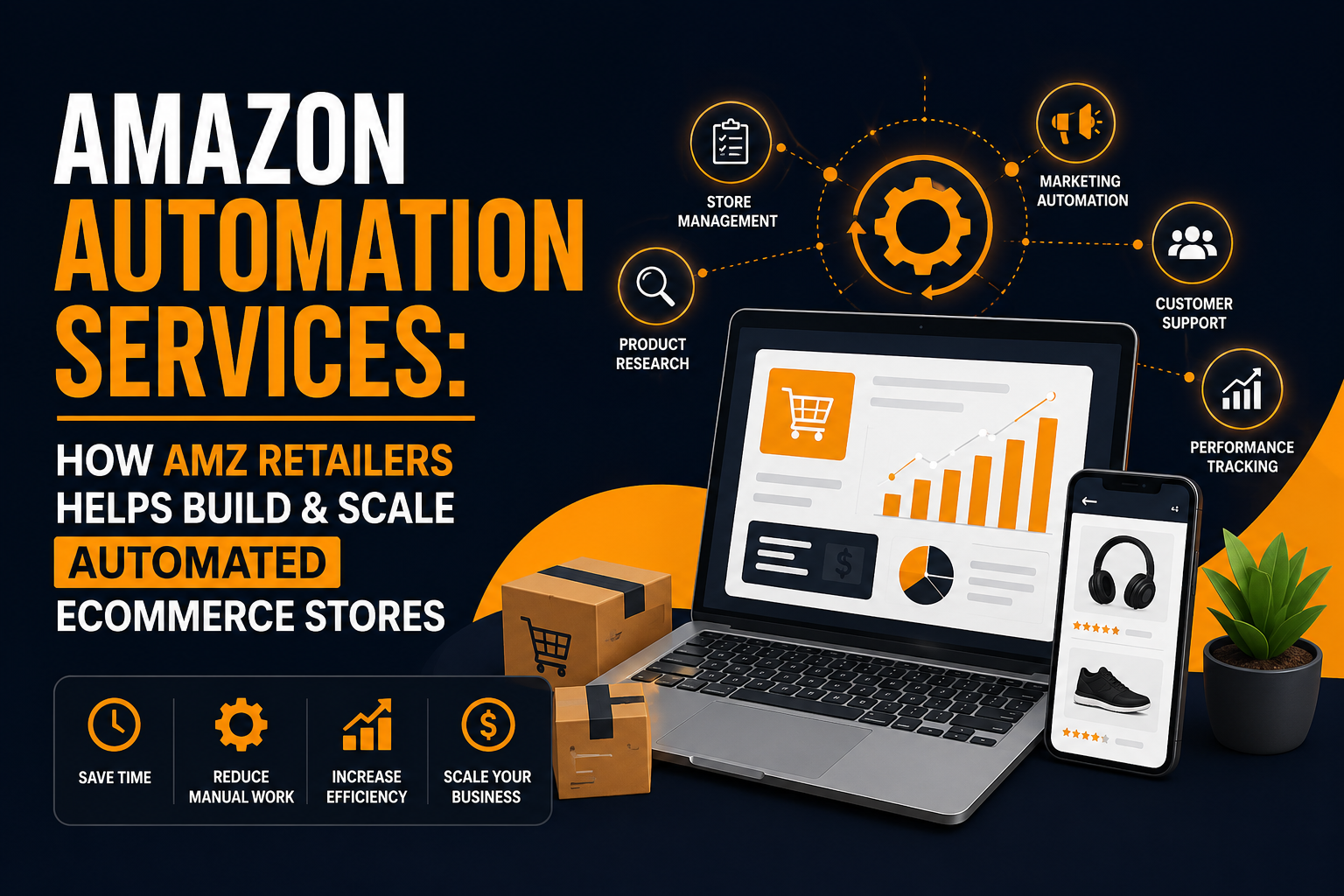
A friend of mine messaged me last winter asking why her Amazon store felt like a second full time job. She barely had 40 products listed. I told her the honest answer. She needed amazon automation services, not more hours in her day. That conversation stuck with me. It’s a question I get asked constantly, and it’s usually the same story. Someone starts small. Things grow a bit. Suddenly they’re drowning in tasks that have nothing to do with actually building a business. This post is about what changed for me once I stopped trying to do everything manually. I started letting the right services and tools carry the operational weight instead.
I’m not writing this as some polished success story. I’ve made plenty of mistakes along the way. I’ll walk through a few of them here because they taught me more than the wins did.
Why I Started Looking Into Automation in the First Place
For the first year of running my store, I did everything myself. Listings, pricing, customer replies, reordering stock, checking ad performance. It felt manageable at first because I only had a couple dozen products. Then I added more SKUs and everything started slipping. I’d miss a reorder window and lose ranking for a week. I’d forget to adjust a price. A competitor watching the market more closely would grab the Buy Box before I even noticed.
That’s the point where I started researching amazon automation services seriously. I stopped just poking around with free tools here and there. I realized the issue wasn’t my product selection or my marketing. It was that I was trying to be five different departments at once. None of them were getting my full attention.
What AMZ Retailers Actually Does Differently
I’ve tried a handful of automation services over the years. Most of them felt like generic software wrapped in a nice looking dashboard. What made a real difference for me was working with a team that understood the actual mechanics of selling on Amazon, not just the tech side of automation.
AMZ Retailers approaches things differently in a few ways I noticed early on.
They Start With Your Actual Store, Not a Template. Instead of dropping you into a one size fits all system, they actually looked at how my store was structured first. My inventory turnover was slower than average because of my product category. A generic 30 day reorder rule wouldn’t have worked well for me. They adjusted based on my real sales data instead of pushing a standard setup on me.
They Handle the Setup, Not Just the Software. This was honestly the biggest relief for me. A lot of amazon automation services hand you a tool and a manual and wish you luck. AMZ Retailers actually helped configure the rules. They tested them and adjusted based on results before leaving me to run things on my own. That saved me weeks of trial and error.
They Focus on Scaling, Not Just Maintaining. A lot of automation setups are built to keep a store stable. Fewer are built with actual growth in mind. What stood out to me was how much attention went into making sure the systems could handle a bigger catalog later. I only had 60 products at the time. When I expanded to almost 300 SKUs a year later, the same framework held up without needing a total overhaul.
How Automated Ecommerce Stores Actually Work Day to Day
People sometimes assume an automated store means nobody is doing anything at all. That’s not accurate. Here’s roughly what a normal day looks like once things are properly set up.
Inventory levels get monitored continuously. Reorder alerts trigger automatically once stock hits a certain threshold, based on actual sell through rate rather than a random guess. Pricing adjusts within the margin rules I set. I’m not manually checking competitor prices five times a day like I used to. Customer messages that fall into common categories, like order status or sizing questions, get handled through templates that still sound like a real person wrote them. Ad campaigns adjust bids based on performance data instead of me guessing which keywords deserve more budget.
None of this means I disappear from the business. I still review performance weekly. I make calls on new products and handle anything that falls outside the normal patterns. The difference is I’m not buried in repetitive tasks that don’t need my judgment every single time.
Setting Realistic Expectations Before You Start
This part matters more than people think. Automation isn’t an instant fix. Treating it like one usually leads to disappointment, or worse, mistakes that cost real money.
When I first started using amazon automation services, I expected everything to run perfectly within days. It didn’t. The first couple of weeks involved adjusting rules that were either too aggressive or too conservative. My repricing rules initially let prices drop lower than I was comfortable with. I tightened the margin floor after that. That’s normal. Any system needs a bit of calibration based on how your specific store behaves.
Give it a few weeks before judging whether something is working. Watch the data. Adjust based on what you actually see happening, not what you assumed would happen going in.
Common Concerns Sellers Have About Automation
A few worries come up constantly when I talk to other sellers considering this shift. It’s worth addressing them directly.
Will automation make mistakes I won’t notice right away? It can, especially early on if rules aren’t set carefully. This is why guardrails matter so much, like setting a price floor before turning on repricing. A good service will help you set these boundaries properly instead of just handing you a system and walking away.
Will my store feel less personal to customers? Not if it’s done right. Templates for customer replies should sound human, not robotic. I write mine in my own voice. Customers rarely notice they’re reading a templated response because it doesn’t read like one.
Is it expensive to get started? It depends on your store size. Most sellers find the return outweighs the cost fairly quickly. Factor in the hours saved and the mistakes avoided, like missed reorders or lost Buy Box time.
How to Know You’re Ready for This Step
You don’t need hundreds of products to benefit from automation. There are a few signs that it’s time to look into it seriously. If you’re spending more time on repetitive tasks than on actual growth decisions, that’s a clear signal. If you’ve had stockouts or pricing mistakes because you simply couldn’t keep up manually, that’s another one. And if you’re planning to scale your catalog significantly in the next year, setting up proper systems now saves you from a painful transition later.
I waited too long before making this move myself. I assumed automation was only for bigger sellers with hundreds of SKUs. Looking back, I wish I’d started when I only had 30 products. The learning curve would have been much smaller.
Final Thoughts
Building and scaling an automated ecommerce store isn’t about removing yourself from the work entirely. It’s about spending your energy where it actually counts. Focus on product decisions, supplier relationships, and long term strategy, while letting the repetitive operational tasks run in the background.
Working with proper amazon automation services made a real difference for me. Not because the tools themselves were revolutionary, but because they were set up thoughtfully around how my store actually operated. Nobody forced a generic template onto my business. If you’re feeling buried in day to day tasks right now, that’s usually the clearest sign it’s time to make this shift.
Start with one piece, get it stable, and build from there. The goal was never to disappear from your business. It’s to finally have room to actually grow it.