
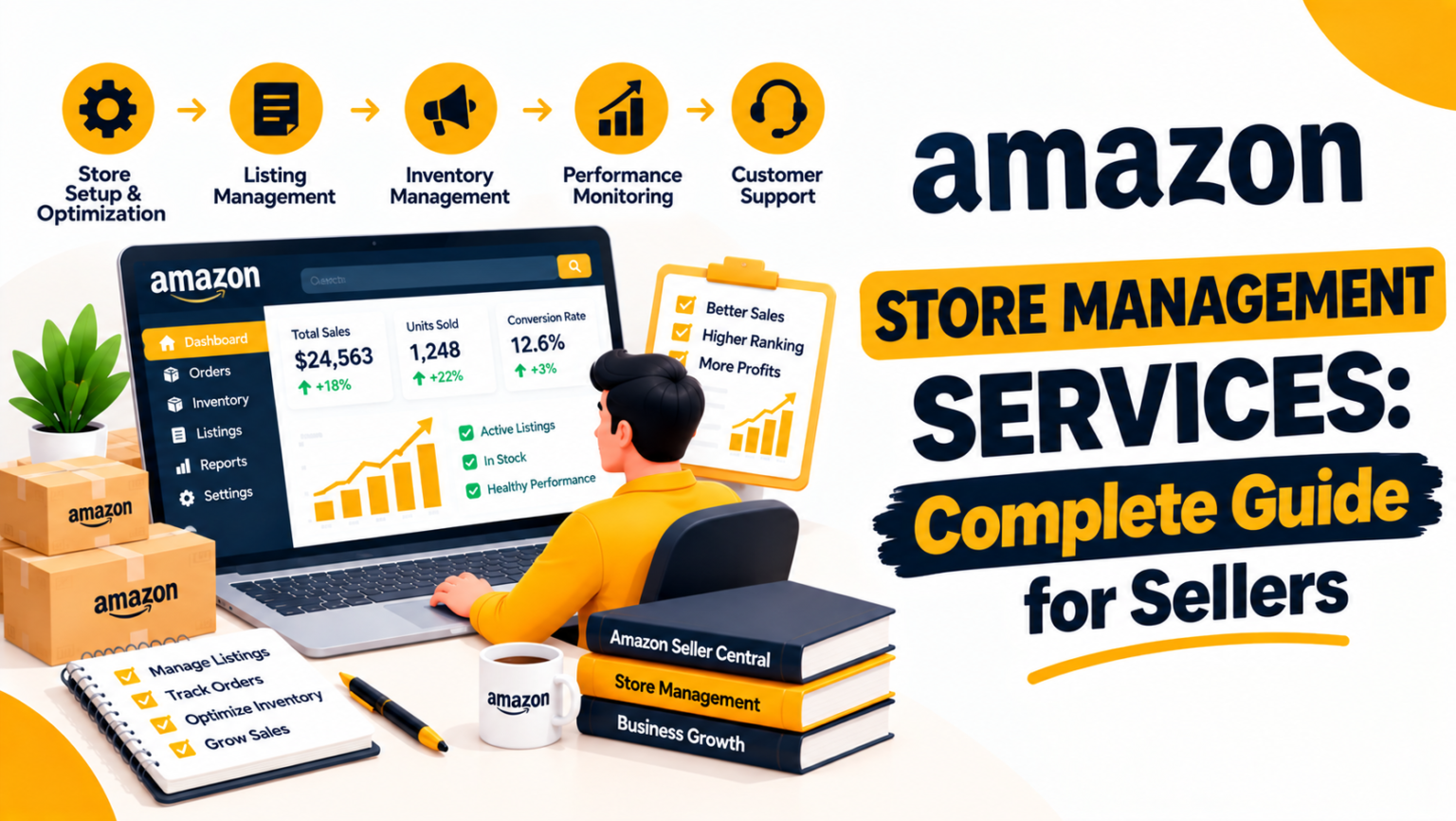
Let’s be real for a second: running a brand on Amazon in 2026 feels less like running a simple online shop and more like spinning plates while riding a unicycle. One morning you’re tweaking ad bids, and by afternoon you’re tearing your hair out over a sudden inbound placement fee or trying to figure out why an automated Amazon bot just blocked your best-selling product. As the platform gets more crowded, the gap between “just throwing up a few listings” and running a tight, profitable operational setup is massive. That’s why so many brand founders eventually hand off the day-to-day work to dedicated Amazon store management services.
If you’re tired of spending late nights buried in Seller Central, or you simply want to grow without taking on a massive payroll, this guide breaks down how to hand over your store operations without losing control.
What Are Amazon Store Management Services?
At its core, Amazon store management means handing off the technical, repetitive work of running your seller account to specialists. Instead of you personally jumping between inventory spreadsheets, PPC software, customer emails, and graphic design tools, an expert team steps in to run operations and drive actual sales growth.
Key Components of Full-Service Amazon Account Management
Full-service management isn’t just someone logging in once a week to adjust a few keyword bids. A solid agency handles every single moving part of your business:
- Catalog & Listing Upgrades: Writing clear, natural sales copy and organizing product options while optimizing for search algorithms.
- Advertising & PPC Oversight: Setting up Sponsored Products, Video ads, and Display campaigns that actually hit your profit goals instead of burning cash.
- Inventory & Supply Chain Tracking: Keeping an eye on sell-through rates so you don’t run out of stock or get hit with heavy inventory holding fees.
- Account Safety & Problem Solving: Jumping on policy warnings, listing suspensions, IP claims, and performance issues before they ruin your account standing.
Self-Management vs. Hiring a Specialized Amazon Agency
Managing everything yourself is totally fine when you’re selling two or three items and pulling in a few grand a month. But as soon as your product line expands, doing everything solo becomes a giant operational bottleneck.
Building an internal team requires hiring a dedicated PPC manager, an SEO copywriter, a graphic designer, and a logistics coordinator—which easily runs thousands of dollars a month in base salaries alone. Partnering with a specialized agency gives you access to a fully trained team right away, without the massive hiring overhead.
Who Needs Amazon Management Services in 2026?
Outsourcing isn’t mandatory for every business, but it’s usually a massive shortcut if you fall into one of these buckets:
- Established Private Label Brands: Sellers already doing $20,000+ a month who need their personal time back to focus on sourcing new products.
- Traditional Offline Manufacturers: Companies with great products that lack the specific Amazon know-how needed to beat out online-native competitors.
- Multi-Channel Brands: Businesses expanding onto Amazon alongside Shopify, Walmart, or retail stores that need expert execution from day one.
Core Services Included in Amazon Store Management
What does an agency actually do on a day-to-day basis? Here’s a clear look at what you’re paying for.
Amazon Storefront Setup and Brand Registry
If you own a registered trademark, signing up for Amazon Brand Registry is a no-brainer. A management team handles the setup paperwork and designs a custom, multi-page Amazon Storefront. Think of this as your brand’s private website directly inside Amazon—a clean space where shoppers can browse your full catalog without seeing distracting ads from competitors.
Product Listing Creation and SEO Optimization
Stuffing search phrases into a listing doesn’t work like it used to. Modern listing optimization is all about striking a balance between search visibility and real human persuasion.
[ High-Converting Amazon Listing ]
│
┌───────────────────────┴───────────────────────┐
▼ ▼
【 Search Engine Optimization 】 【 Buyer Conversion Design 】
- Main Keyword Placement • High-Impact Hero Images
- Natural Long-Tail Search Terms • Custom A+ Content Sections
- Backend Search Attributes • Clear Infographics & Video
By combining natural keyword placement with high-end graphic design and A+ Content sections, store managers help you rank higher and turn more browsers into paying customers.
Inventory Management and FBA Logistics
Between Amazon’s shifting FBA fulfillment costs, inbound placement charges, and penalties for carrying too little or too much inventory, bad supply chain planning will eat your profits alive. A management team monitors sales velocity, predicts seasonal spikes, and helps build shipping plans that keep stock moving cleanly.
Amazon Advertising (PPC) and DSP Campaign Management
Getting consistent traffic on Amazon takes way more than throwing high bids at basic search terms. Account managers build multi-layered ad strategies:
- Sponsored Products: Reaching motivated buyers who are actively searching for your exact type of product.
- Sponsored Brands & Video: Grabbing attention at the top of search results with visual brand banners and product videos.
- Amazon DSP (Demand-Side Platform): Retargeting people who looked at your product but didn’t buy, as well as reaching audiences on external websites.
Account Health Monitoring and Compliance
Nothing halts a growing business faster than a sudden listing suspension or an automated compliance notice. Account managers keep a daily eye on your Account Health Rating (AHR), handle customer feedback issues, clear valid IP claims, and draft detailed appeals if a listing ever gets pulled down by mistake.
Key Benefits of Outsourcing Your Amazon Operations
Bringing in outside help isn’t just an extra operational bill—it’s an investment designed to pay for itself through better performance.
Scaling Keyword Ranks and Sales Velocity
Sales volume and conversion rates are what fuel Amazon’s ranking system. By pairing optimized listings with strategic advertising, an experienced team creates the buying momentum needed to get your main keywords onto Page 1—and keep them there.
Protecting Your Net Margins
When ad costs go up or Amazon changes its fulfillment fees, simply raising your prices isn’t always realistic. Good account managers protect your profit margins by cutting ad spend on non-converting search terms, optimizing packaging to lower FBA tier sizes, and choosing smarter inventory shipping options.
Freeing Up Your Personal Time
Your highest-value work as a business owner is finding new products, negotiating better supplier terms, and planning big-picture strategy. Offloading daily administrative headaches lets you step away from the tedious routines and focus on actual business growth.
Staying Clear of Account Suspensions
Navigating Amazon’s strict policies can feel like walking through a minefield. Experienced store managers know what claims you can’t make in product copy, how to deal with customer returns properly, and how to keep your store fully compliant.
How to Choose the Right Amazon Management Partner
Agencies come in all shapes and sizes, and picking the wrong one can waste months of momentum. Here is how to screen potential partners before making a commitment.
Software Tools Your Agency Should Be Using
A competent service provider won’t make business decisions based on guesswork. They should be working with industry-standard software:
| Tool Category | Software Examples | What They Should Be Doing With It |
| Keyword & Market Research | Helium 10, Jungle Scout | Tracking search volume trends and analyzing competitor keywords. |
| PPC Optimization | Perpetua, Pacvue | Running automated bid adjustments and managing campaign scaling. |
| Financial Tracking | Sellerboard, Inventory Planner | Tracking exact net margins in real-time and forecasting reorder dates. |
| First-Party Insights | Brand Analytics, POE | Analyzing actual customer purchase habits and search trends directly from Amazon. |
Understanding Pricing Models
Management providers usually charge in one of three ways:
- Flat Monthly Retainer: You pay a fixed amount every month regardless of sales volume. Super easy to budget for, though the agency’s pay isn’t tied directly to your performance.
- Percentage of Revenue: The agency takes a cut (usually between 3% and 8%) of your sales. This incentivizes them directly to help you sell more.
- Hybrid Model (Base Retainer + Revenue Share): A modest monthly base fee paired with a smaller percentage of sales growth. This keeps things stable for the agency while motivating them to scale your account.
Important Questions to Ask Before Signing On
Don’t sign a contract until you ask candidate agencies these questions:
- “Can you show me real results you’ve achieved for other brands in my specific niche?”
- “Who will actually be managing my account day-to-day, and how many other clients are they handling?”
- “What is your exact process when an ASIN gets suspended or inventory gets delayed?”
Common Management Mistakes (And How to Avoid Them)
Knowing where things usually go wrong makes it much easier to protect your business.
Poor Inventory Planning and Surprise Storage Fees
Ordering too much inventory leads to high long-term storage fees and locked-up capital. Ordering too little leads to stockouts that destroy organic rankings you spent months building. Prevent this by setting up clear reorder alerts based on actual 30-day and 90-day sales trends.
Ignoring Customer Feedback and Health Warnings
Brushing off bad reviews or customer complaints hurts more than just your brand reputation—it tanks your conversion rates and draws unwanted attention from Amazon’s system. Make sure negative reviews are addressed quickly using official Seller Central tools and keep customer service metrics clean.
Throwing Ad Budget at Poorly Designed Listings
Running ads on a product page with low-quality photos, thin copy, or bad reviews is like pouring water into a leaky bucket. Always fix the listing layout, images, and price point before cranking up ad budgets.
Pre-Hiring Checklist for Sellers
Thinking about bringing in a store management team? Make sure you can check off these four points first:
- [ ] Healthy Profit Margins: Is your product pricing high enough to cover management fees while keeping your profit intact?
- [ ] Reliable Sourcing: Can your suppliers ramp up production quickly if sales double over the next few months?
- [ ] Brand Protection: Is your trademark active and registered with Amazon Brand Registry?
- [ ] Clear Performance Goals: Do you know your target profit margins, ad spend limits (TACOS), and growth targets?
If you can confidently check these boxes, hiring a dedicated management team might be the smartest move you make for your brand this year.