You spot a gadget on Amazon, then notice it’s going for more on eBay. Amazon to eBay dropshipping looks like free money, and a lot of YouTube tutorials make it seem like a weekend project. Before you pay for any software, though, you need to know whether it’s even allowed.
Here’s my direct answer. As I understand it, eBay’s policy doesn’t accept listing another retailer’s item and shipping it straight to your buyer. Policies change, and I can’t verify today’s exact wording, so read eBay’s and Amazon’s official pages yourself. Then come back, and we’ll look at how this workflow works, which tools exist, and what safer options you have.
How Amazon to eBay Dropshipping Actually Works
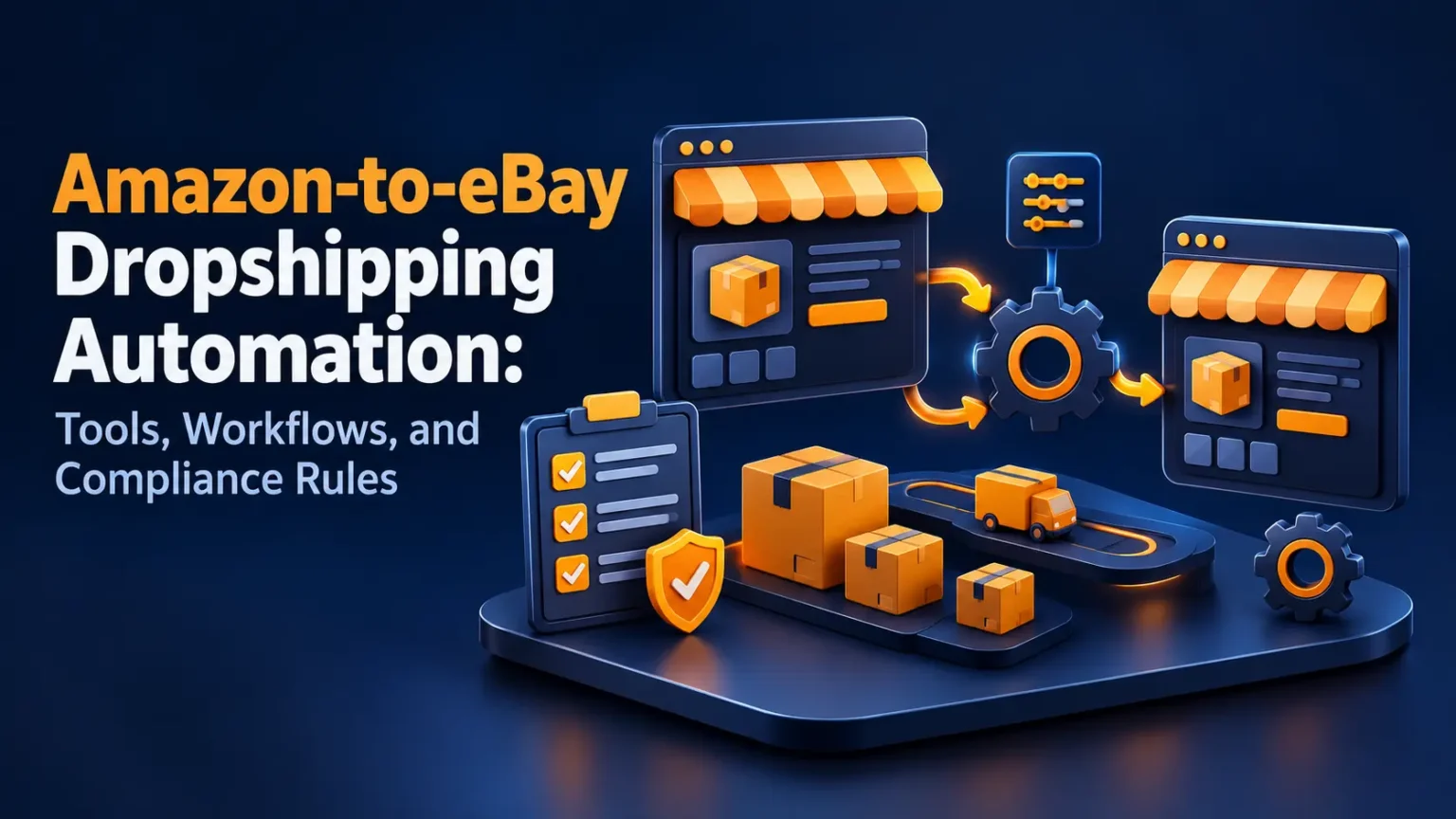
The idea is simple. You take a product from Amazon and list it on eBay for a bit more. When a customer buys, you place an order on Amazon and send it to their address instead of yours.
You never handle the product. Software takes care of the repetitive stuff, like importing listings, changing prices, and watching stock. On paper, that gives you a smooth automated eBay store. In practice, it creates problems no tool can fix.
Why It Looks So Appealing
The pitch is hard to resist. You don’t buy stock, you don’t rent storage, and you don’t pack a single box. A beginner can have dozens of listings live by Sunday night.
Speed is the catch, though. Fast, cheap setups usually hide their weak spots until the day an account gets flagged.
Where Amazon to eBay Dropshipping Breaks Down
Think about what your buyer goes through. They pay you, then wait while you place a second order with a completely different company. You don’t control the stock, the packaging, or the shipping speed.
Prices also shift without warning. Say the Amazon item jumps in price or sells out overnight. Your eBay listing is still live, so you end up cancelling an order, apologizing to a buyer, and taking a hit on your seller record.
What the Rules Actually Say
This is the part most gurus skip. To my knowledge, eBay allows dropshipping only when you’re responsible for the sale and the buyer gets a proper experience. Buying from another retailer and sending the item straight to your customer generally falls outside that. Amazon also has its own terms about how its orders can be resold and shipped.
I’m not a lawyer, and I won’t pretend to quote the current policy text. So open eBay’s dropshipping policy and Amazon’s terms, and read them slowly. If anything’s unclear, ask eBay’s seller support before you build a business on it.
What Can Happen to Your Account
Trouble rarely hits all at once. Usually, a few listings get pulled first. After that, your selling limits tighten, and in serious cases the account gets suspended.
Buyers add to the pain. Some receive a package with Amazon branding or the wrong invoice, and they open disputes. Each dispute chips away at your standing, and recovering from that takes far longer than building it did.
The Tools You’ll Run Into
Most sales pitches for eBay dropshipping automation rely on a few kinds of tools. Knowing what each one does helps you spot an honest offer. I won’t quote prices here, because they change and I can’t verify them.
eBay Listing Automation
An eBay listing automation tool copies titles, photos, and descriptions from a source and publishes them in bulk. It’s a real time saver when you use it with your own products or an approved supplier’s catalog. However, copying another retailer’s pages can lead to image and copyright trouble on top of the policy risk.
Repricing and Inventory Sync
These tools watch source prices and stock levels, then update your listings to match. They work well when your supplier shares reliable data. They work badly when the numbers come from a retail website that changes without notice.
Order Routing
Order routing passes each sale to your supplier automatically. With a true dropship partner, that’s a normal and approved workflow. With a retail source, it’s often where accounts get into trouble.
A Safer Way to Automate
Here’s the good news. You can keep the automation and drop most of the risk. The fix is changing where your products come from.
Try a workflow like this:
- Choose a sourcing model that eBay’s policy accepts, such as your own inventory or a wholesale supplier who agrees to dropship.
- Get the supplier’s terms in writing, including shipping times and return rules.
- Import the supplier’s catalog with a listing tool.
- Connect inventory sync to the supplier’s own data feed.
- Place a few test orders yourself before you scale.
Which of those steps would you be tempted to skip? Most beginners skip the second one. That’s usually where the trouble starts.
Sourcing Models Compared
A quick table shows how the options stack up.
| Factor | Retail Arbitrage Dropshipping | Wholesale Dropship Partner | Your Own Inventory |
|---|---|---|---|
| Policy risk | High | Lower, if terms are verified | Lowest |
| Upfront cost | Low | Low to moderate | Higher |
| Control over stock | Very little | Some | Full |
| Shipping reliability | Unpredictable | Depends on the supplier | Yours to manage |
| Scalability | Limited by risk | Good with a solid partner | Limited by cash |
Notice that the cheapest path carries the highest risk. That’s how it usually goes.
Two Short Scenarios
Real stories make this easier to picture, so here are two.
The Beginner Who Got Suspended
Jordan watched a tutorial on Amazon to eBay dropshipping and listed about a hundred products in a week. Sales came in fast, and he felt like a genius. Then buyers started getting late packages with Amazon labels, and complaints piled up.
A couple of months later, his selling privileges were restricted. He never saw it coming, because the tutorial never mentioned the policy.
The Seller Who Switched
Casey sold a handful of items the same way and got a warning early. She didn’t argue or hope it would blow over. She stopped, read the policy end to end, and went looking for a wholesale supplier with real dropship terms.
Her margins got a bit thinner, but her orders shipped on time. These days she runs a steadier automated eBay store, and she isn’t dreading her inbox anymore.
Red Flags and Realistic Expectations
Some warning signs should make you pause:
- Gurus who promise easy profits from copying Amazon listings
- Tools that hide where an item really comes from
- Claims that policy rules “don’t apply” to automated stores
- Pressure to list hundreds of items on day one
Margins in this space can be slim. You’re paying for tools, selling fees, and shipping, and all of that eats into what’s left. The workload doesn’t vanish either, since you’ll still handle messages, returns, and supplier hiccups.
As for income, I can’t promise a number. Anyone who does is either guessing or selling you a course.
Your Next Step
Start by reading eBay’s current dropshipping policy from top to bottom. Then ask yourself honestly whether your sourcing plan fits it. If it doesn’t, go back to the drawing board before you build anything.
Once you’ve got a plan that holds up, test it with a small batch of products. Skip the risky shortcuts of Amazon to eBay dropshipping and build on approved suppliers instead, which protects your account and your time. Start small, check every order yourself, and only scale when the numbers hold up.