
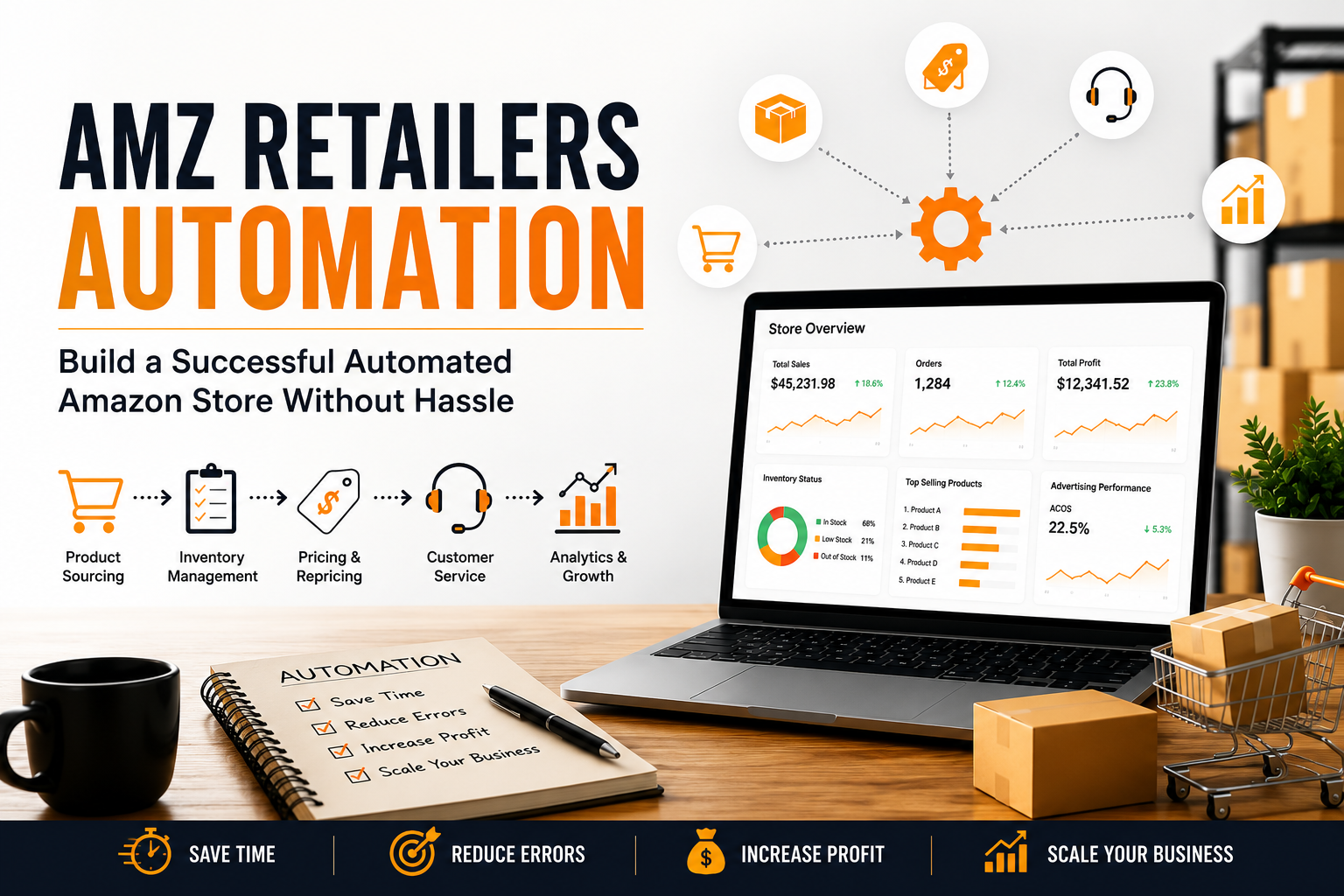
Okay so here’s the thing. I still remember the exact night this clicked for me. It was past 1 a.m., I had way too many browser tabs open, a spreadsheet full of SKUs staring back at me, and this creeping fear that my Amazon store was basically going to eat my entire life. That’s the night I properly looked into amz retailers automation, not because I read some article about it being the future, but because I was genuinely tired and needed things to change. And it did change things for me, though not in the dramatic way people online make it sound. It’s not some magic switch you flip and suddenly you’re hands off forever. Once you get what automation can actually do, and honestly what it just cannot do, you start building something that doesn’t run you into the ground every day.
So this is basically me writing down what actually worked, what didn’t, and a few things I’d probably tell a friend over coffee if they asked me where to even start.
What Automation Actually Means for an Amazon Store
Can we clear something up first. When people hear “automated Amazon store” they picture some robot quietly running the whole show while the owner is on a beach somewhere with a drink in hand. I get why that image sells courses. It’s just not how it actually works though. Real automation, at least the version I’ve built, is mostly about getting rid of the boring repetitive stuff so your brain has space left for things that matter more, like finding better products or actually talking to your supplier instead of just emailing invoices back and forth.
Think about a regular day running a store on Amazon. Repricing so you don’t lose the Buy Box. Checking inventory across a few warehouses. Answering the same three questions from customers, again. Reordering stock before you run out completely. None of that really needs you sitting there thinking hard every single time. That’s the part automation quietly takes care of.
Why So Many Sellers Get Stuck Without It
Nobody really warns you about this part when you start selling on Amazon. The platform rewards whoever moves fastest and quietly punishes anyone who hesitates. Buy Box eligibility shifts constantly, sometimes within the same hour. Competitors undercut you in minutes. A few bad reviews and your ranking can drop overnight. If you’re tracking all this by hand, you’re basically always a step behind, no matter how hard you try.
I’ve talked to a few sellers who tried jumping from 50 products to 500 without any automation at all. Almost every single one of them hit a wall eventually. Not because their products were bad, not because their marketing was weak, but because the day to day operations just became too much. They were so buried in updating listings and chasing down shipments that there was nothing left in the tank for actually growing the business.
Which is really the whole point behind amz retailers automation, if I’m being honest. It’s not about being lazy or taking shortcuts. It’s about staying afloat in a marketplace that just moves faster than any human can manually keep up with, especially once your catalog grows past a certain size.
The Core Pieces Worth Automating First
If you’re building this from zero, don’t try to automate everything on day one. That’s how people break things. Break it into smaller pieces instead.
Inventory and Reordering. Most sellers start here, and honestly it makes sense. Running out of stock kills your ranking and your momentum almost instantly, and it’s brutal to recover from. A tool that watches your sell through rate and triggers a reorder once you hit a certain threshold saves you from those painful gaps where your listing just sits there with no stock. My own rule is pretty basic. Once inventory drops below roughly a 30 day supply based on average sales, it gets flagged automatically.
Pricing and Buy Box Management. Repricing tools keep an eye on competitors and adjust your price within whatever limits you set, like never going below a certain margin no matter what. This is probably the easiest win inside amz retailers automation, honestly, because it protects your profit while still keeping you competitive without you babysitting it all day.
Customer Service Replies. So many buyer messages are basically the same question over and over. Where’s my order. How do I return this. Does this run small. Templates triggered by keywords can handle most of that, as long as you actually write them like a person talking, not some stiff corporate script.
Advertising and Bid Changes. PPC benefits a lot from this too, more than people expect. Bid adjustments, dayparting, negative keywords, all of it can run on rules instead of you refreshing your ad dashboard five times a day like it’s Instagram.
Setting This Up Without Losing Control of Your Store
This is honestly where most people mess it up, myself included at one point. Either they automate everything at once and end up with some pricing disaster, or they’re too scared to touch anything and just burn themselves out doing it manually forever.
Start small, seriously. Pick whatever task is eating the most time or causing the most stress, and just automate that one thing first. For most sellers that’s repricing or inventory alerts. Watch how it behaves for a couple weeks before you fully trust it. Adjust the rules as you actually see what happens, not what you assumed would happen.
Once that’s stable, move on to the next piece. Maybe reorder points next, maybe customer templates after that. The whole point was never removing yourself from the business completely, not even close. It’s removing yourself from the repetitive stuff so you actually have energy left for strategy, sourcing, and building real relationships with suppliers.
I’ll be honest about my own mistake here because it still bugs me a little. I turned on aggressive repricing once without setting a proper price floor. Within two days a competitor’s bot basically dragged my price down close to cost before I even noticed what was happening. Lesson learned though, the hard way. Always set your guardrails before you let anything run on its own.
Picking Tools That Actually Fit Your Store
Not every tool makes sense for every seller, and I think people forget this. If you’re running ten listings, you probably don’t need some giant enterprise suite with a steep learning curve and a price tag that matches it. If you’re managing hundreds of SKUs across different marketplaces though, a basic tool just won’t hold up either.
Ask yourself a few honest questions before spending any money on this stuff. How many listings are you actually managing right now, and where do you realistically expect to be in a year. Do you need support across multiple marketplaces or is it just Amazon US for now. Are you actually comfortable setting rules and checking dashboards, or do you want something closer to fully hands off.
Mistakes I’d Tell You to Skip
Don’t automate a process you don’t fully understand yourself first. If you don’t know how your own repricing logic should work for your margins, there’s no way you can set good rules for software to follow blindly. Learn it by hand first, even if it feels tedious for a while.
Don’t set it up once and then just forget about it completely. I’ve seen sellers build their rules and never look at them again for months at a time. Costs shift, competitors change tactics, and rules that made total sense six months ago might quietly be costing you money right now.
Don’t chase every shiny new tool that shows up in your inbox either. Plenty of software promises to transform your entire Amazon business overnight, but stacking five overlapping tools usually just creates confusion instead of removing any. Pick things that actually work well together, not more dashboards for you to babysit.
If you’re starting from a mostly manual setup right now, here’s roughly how I’d pace things out. First month, just focus on inventory automation and basic repricing rules. Second month, add PPC automation and start testing customer service templates. Third month, actually sit down and review the data from all these systems, and adjust based on what’s really happening.
Final Thoughts
Building a successful automated Amazon store was never really about disappearing from your own business entirely. It’s about spending your energy on the stuff that actually matters. The sellers who do this well aren’t sitting somewhere relaxed while robots run everything for them. They’re still very much involved, just in the parts that genuinely need a human brain behind them, like product decisions, branding, and actual relationships with suppliers.
Amz retailers automation, done with a bit of patience and some trial and error, gives you room to actually grow instead of just barely surviving each day. Start with one process. Get it working properly first. Then build from there, slowly. Skip the shortcuts promising instant results with zero setup, because those almost always cost you more in the end than whatever they claim to save.
If there’s one thing I’d tell someone just starting out with all this, it’s honestly just this. Automation is a tool, not some replacement for good judgment. Treat it that way, and you’ll end up building something that actually lasts longer than the next algorithm update Amazon decides to roll out.