
Three years ago I was updating inventory spreadsheets at midnight, answering the same customer question for probably the fifth time that day, wondering why I even started this store. Building an automated ecommerce business wasn’t some grand plan I sat down and mapped out. It was survival, plain and simple. I was drowning and something had to give.
If you’re running a store right now and it feels like you’re constantly putting out fires instead of actually growing anything, I’ve been exactly there. This isn’t a theoretical guide from someone who’s never touched a Shopify dashboard at 1 a.m. This is just what actually happened to me.
Why Doing Everything Manually Falls Apart Once You Scale
At ten orders a day, manual everything feels fine. You can personally check inventory, answer every email, process refunds one at a time, no real stress involved. I genuinely thought automation was something for big brands, not small operations like mine.
Then I hit thirty orders a day. Then fifty. Suddenly I was spending more time on admin than on anything that actually grew the business. Product research, marketing, building relationships with suppliers, all of it got shoved aside because I was buried under repetitive tasks that felt urgent but weren’t moving anything forward.
That’s usually the point where sellers either burn out completely or finally start looking into automation. I burned out first, if I’m being honest. Only started researching solutions after I nearly walked away from the whole thing.
The Mistake That Actually Pushed Me to Change
I missed a restock deadline because I was tracking inventory manually across three sales channels in a messy spreadsheet that honestly should’ve been retired months earlier. A bestselling product went out of stock for eleven days, right during a peak sales window. That one mistake cost me more than any automation tool would’ve cost for an entire year, and I mean that literally, I did the math afterward.
What Automation Actually Looks Like Day to Day
People hear “automated ecommerce business” and picture some hands off operation running on autopilot with no human involved at all. That’s not really accurate, at least not for most sellers I know. Automation handles the repetitive, predictable stuff so your actual brain gets freed up for decisions that need real thinking.
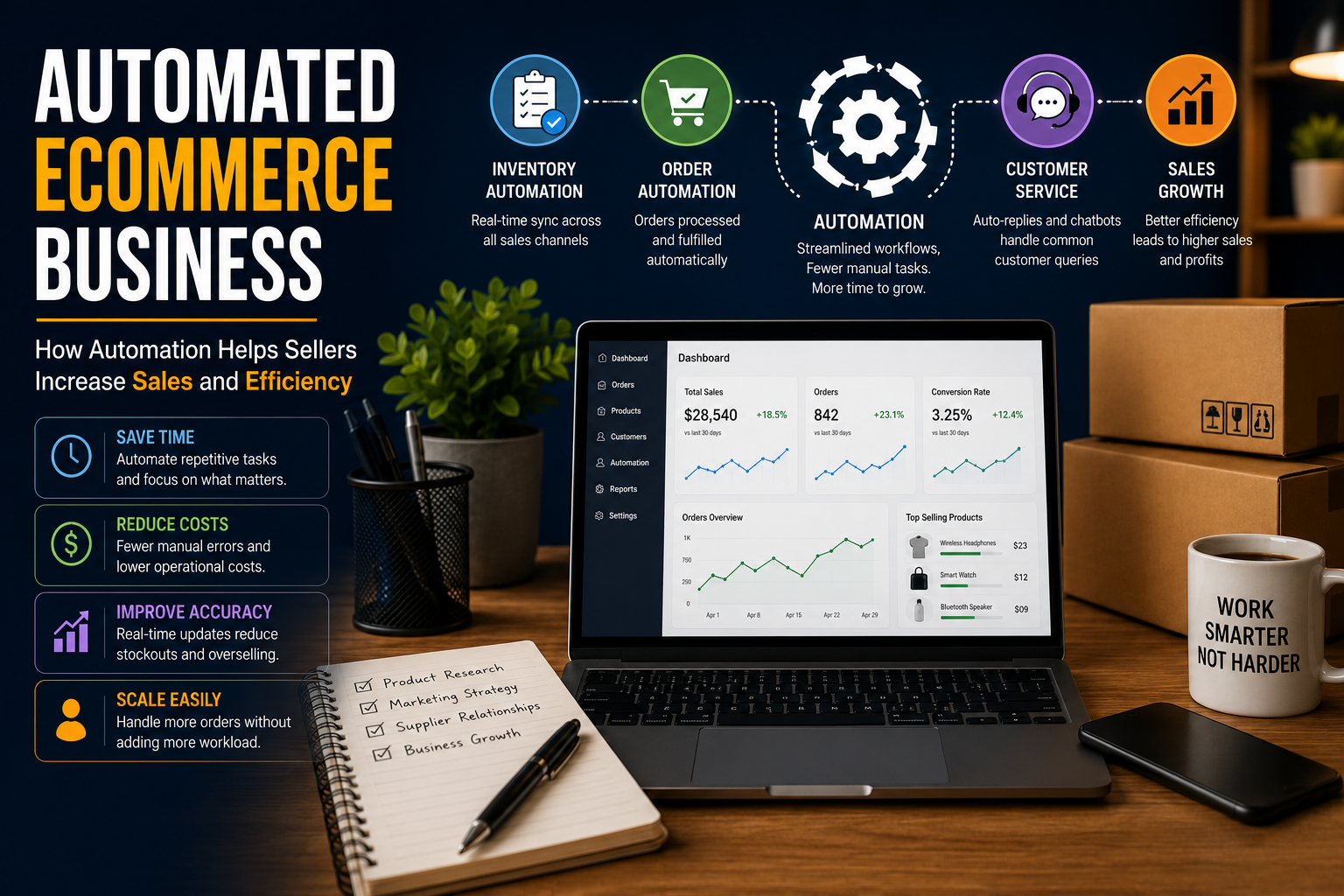
Inventory syncing across channels is usually where people start, and it’s where I started too. If you sell on Amazon, Shopify, and Etsy at the same time, manually updating stock counts across all three every time something sells is basically a recipe for overselling and furious customers. Tools that sync inventory in real time eliminated what was probably my biggest stress source in those early years.
Order fulfillment automation came next. Instead of printing labels and packing slips one order at a time, connecting my store to a fulfillment system meant orders flowed straight through without me touching each one individually. This single change gave me back close to ten hours a week, which doesn’t sound huge until you realize that’s basically a part time job’s worth of hours suddenly free for actual strategy.
Customer service automation is another piece worth mentioning. A chatbot handling basic shipping and return questions meant I could focus on the messy, complicated customer situations that actually needed a human’s judgment.
One Small Thing That Made a Bigger Difference Than Expected
I used to manually send follow up emails asking customers for reviews. Some days I remembered, most days I didn’t, and my review count reflected that inconsistency pretty badly. Once I set up an automated sequence triggered a week after delivery, my review volume jumped noticeably within the first month, without me touching it again after the initial setup.
Sounds small, I know. But that single automated sequence directly improved my conversion rate, because new shoppers trust a store that already has a solid pile of reviews. One tiny piece of automation ended up affecting sales in a way I honestly hadn’t even planned for.
Building the Right Systems for Your Own Store
Not every business needs the same level of automation, and figuring out where to actually start matters more than trying to automate everything at once. I made that mistake early on, tried to automate too much too fast, and it created more confusion than it solved.
Start with whatever task eats the most of your time relative to how much actual decision making it requires. For me that was inventory. For a friend running a subscription box business, it was billing and payment retry logic for failed transactions. Your bottleneck is probably different from mine, so be honest with yourself about where your week actually goes before picking any tools.
Order volume matters here too. A store doing five orders a day genuinely doesn’t need the same automation stack as one doing five hundred. Overbuilding too early just adds complexity and monthly costs you don’t need yet, and I learned that one the expensive way.
Questions Worth Asking Before You Buy Any Tool
Does this actually integrate cleanly with the platforms you already use? I once bought software that promised seamless integration, then spent an entire weekend fighting a broken API connection instead of saving any time at all.
What happens when something breaks? Automated systems still need eyes on them. I check my inventory sync dashboard weekly, not because I distrust it, but because catching a small glitch early beats discovering a full blown stockout two weeks later.
Will the pricing actually scale reasonably as your order volume grows? Some tools charge per order processed, which looks cheap at low volume and gets expensive fast once your automated ecommerce business actually starts scaling the way you’re hoping it will.
Let’s Talk Real Numbers
Automation isn’t free, and pretending otherwise doesn’t help anyone. Basic inventory syncing might run twenty to fifty dollars a month. Fulfillment automation and more advanced customer service tools can push that total closer to a few hundred monthly, depending on your volume and how many channels you’re juggling.
I did the math on time saved versus what I spent, and it wasn’t close. The hours I got back were worth way more than the tool costs, especially once that time got redirected toward marketing and product development instead of administrative busywork nobody enjoys.
That said, don’t assume pricier automatically means better. I’ve tried more expensive tools with clunky interfaces and worse support than cheaper alternatives. Read reviews from sellers in your specific niche, since automation needs vary a lot between, say, apparel and digital products.
Mistakes I Made Along the Way
Automating customer service too aggressively too soon. My chatbot started answering nuanced complaint emails with generic responses that made already frustrated customers even angrier. Had to dial that back and only automate the genuinely simple, repetitive stuff.
Not testing new systems before fully trusting them. I switched inventory tools once without running it parallel to my old setup first, and a sync error caused a brief but genuinely stressful overselling situation before I caught it.
Assuming automation meant I could disappear from my own business entirely. Running an automated ecommerce business still needs oversight from you. The goal is removing repetitive manual labor, not removing yourself from decisions that matter.
What Actually Changed Once Automation Clicked
Within about four months of building out proper systems, my weekly workload dropped by more than half. That freed up time went straight into product research and better supplier relationships, which moved revenue in a way manual busywork never could have on its own.
Final Thoughts
Building an automated ecommerce business isn’t about removing the human element from your store. It’s about making sure your time and attention actually go toward decisions that need a person behind them, instead of getting eaten alive by repetitive tasks a decent tool can handle just fine on its own.
Start small. Look honestly at where your time is actually going, and resist the urge to automate everything at once just because it feels productive in the moment. The right systems, added gradually and checked on regularly, can genuinely change how your store runs day to day. If I could go back and tell my exhausted, midnight spreadsheet self one thing, it would be this. An automated ecommerce business isn’t some luxury reserved for bigger sellers. It’s what lets a small operation survive long enough to actually become a bigger one.