
A former coworker of mine, David, expanded beyond Amazon selling in early 2023 and tried Walmart Marketplace. Within a few weeks, he started exploring Walmart automation services because managing two marketplaces manually was taking up all his free time. He wasn’t lazy. He simply didn’t have enough time for product research, listing optimization, fulfillment, and customer service across two platforms.
I helped him compare several automation providers and even joined a few sales calls. The process showed me how different Walmart’s ecosystem really is from Amazon’s. What works on one platform doesn’t always translate cleanly to the other. A lot of the automation companies out there don’t seem to fully get that either, honestly.
What Walmart Automation Actually Means
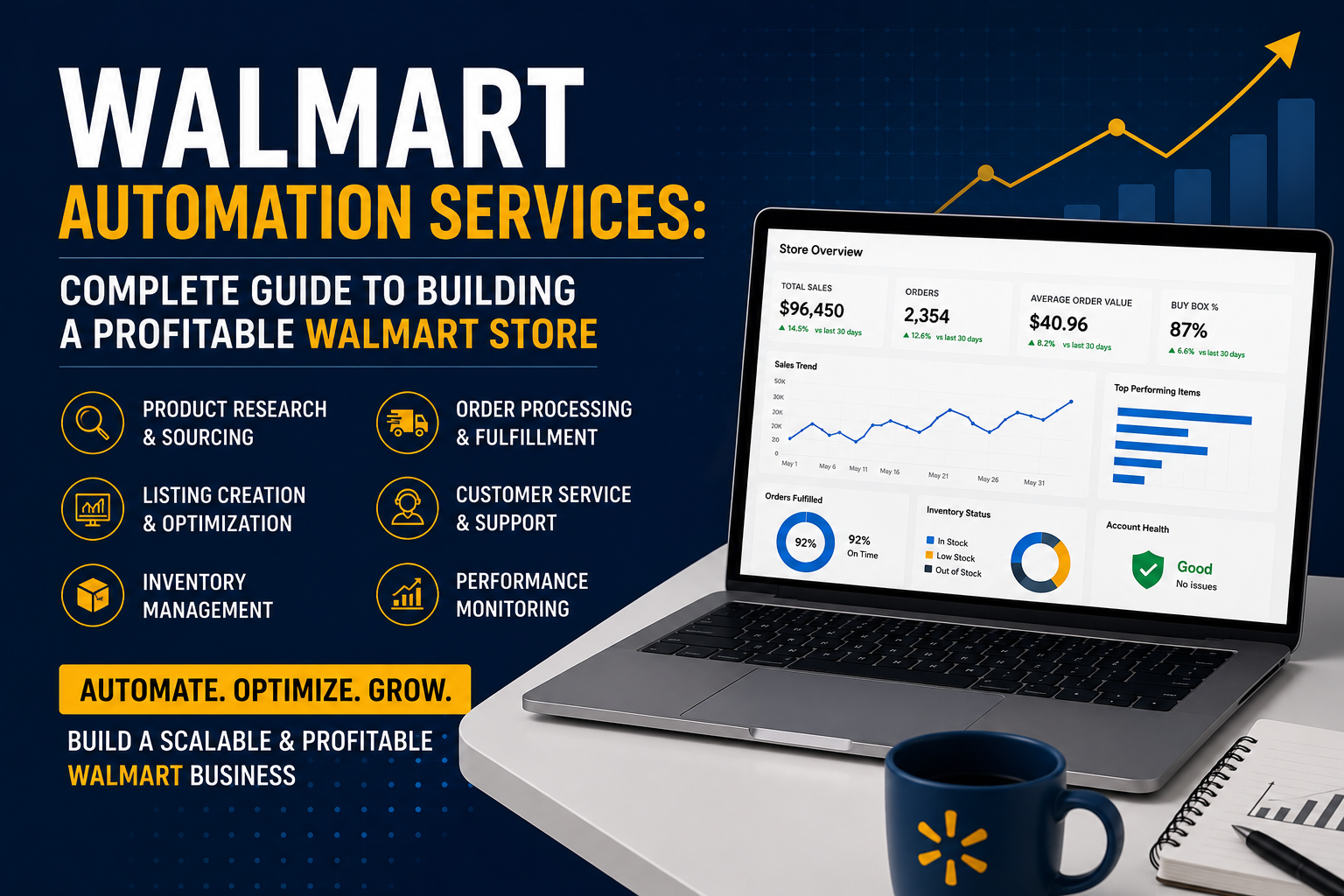
Let’s clear something up first, because there’s a fair bit of confusion floating around this term. Walmart automation doesn’t mean some robot runs your entire business while you sleep and money just shows up. It usually refers to a mix of software tools and, in some cases, an actual team of people handling the repetitive, time consuming parts of running a Walmart store on your behalf.
This typically covers things like product sourcing, listing creation and optimization, syncing inventory across suppliers, processing orders, and sometimes customer service too. Some providers handle everything end to end, basically running your whole store for you. Others just hand you software and expect you to manage the strategy side yourself.
David went with a more hands on provider at first, mostly because he had zero real experience with Walmart specifically and didn’t trust himself to catch mistakes before they became expensive ones. That decision cost more upfront. It also saved him from several rookie errors that probably would’ve gotten his account flagged or suspended within the first month.
Why Walmart Is Different Enough to Actually Matter
The Approval Process Alone Trips a Lot of People Up
Getting approved to sell on Walmart isn’t like Amazon. On Amazon, most people can start listing products within a day or two of signing up. Walmart uses a more selective application process. They review your business history, sales record, and sometimes even your website. Many new sellers get rejected the first time because they don’t know what details to prepare before applying.
David’s first application got denied. No real explanation, just a generic rejection email that told him basically nothing useful. He reapplied about six weeks later with a more polished business profile and got approved on the second attempt. This is honestly one area where decent walmart automation services earn their fee, since experienced providers usually know what Walmart’s team is actually looking for and can help you dodge the common rejection triggers before you even hit submit.
Fulfillment Options Work Pretty Differently Too
Walmart has its own version of Fulfilled by Amazon, called WFS, or Walmart Fulfillment Services. It’s not identical in how it actually operates though. Storage fees, shipping speed requirements, even how returns get processed all have their own little quirks that catch people off guard if they’re coming from Amazon’s system expecting things to work the same way.
David initially assumed WFS worked just like FBA, but he quickly noticed differences in Walmart’s inventory process. His automation provider caught the issue early and adjusted his shipping plans. This helped him avoid unnecessary fees and saved him money.
Quick tip: Before applying to sell on Walmart, prepare a polished business profile with your sales history and website ready to go. A weak first application is one of the most common and avoidable reasons sellers get rejected.
What to Actually Look for in a Provider
Real Experience With Walmart Specifically, Not Just Amazon
This is probably the single biggest mistake people make picking among walmart automation services. A lot of companies market themselves as multi marketplace experts, but dig into their actual track record and almost all their real experience turns out to be on Amazon. Walmart’s algorithm, its policies, seller expectations, all different enough that Amazon expertise alone doesn’t fully carry over.
Ask any provider you’re considering exactly how many active Walmart stores they currently manage, and push for specific examples or case studies if you can get them. If they’re vague or keep dodging the question, that’s usually a sign their actual Walmart experience is thinner than the marketing makes it sound.
Transparency Around Fees and What’s Actually Included
Some providers charge a flat monthly fee. Others take a percentage of revenue, which can add up fast once your store starts growing and you’re suddenly paying way more for the exact same service you started with months earlier. David ended up switching providers around eight months in, partly because his original contract had vague language around what counted as “full management,” and he kept getting surprise charges for things he’d assumed were already covered.
Before signing anything, get a clear, written breakdown of exactly what’s included, what counts as an extra charge, and what happens if you want to cancel or switch providers later. Vague contracts almost always end up costing more than they seem to at first glance.
Communication and Reporting Habits Actually Matter
You want a provider who keeps you informed about your store, not one who sends a vague monthly summary and disappears. Ask how often they provide updates, whether you’ll get dashboard access or detailed reports, and how quickly they handle urgent issues like account health problems or suppressed listings.
David’s current provider shares weekly updates on sales, ad performance, and issues. They also hold a monthly call to discuss bigger strategies. This communication made a big difference compared to his first provider, who stayed quiet until problems had already happened.
What Results Actually Look Like, Realistically
It’s worth setting expectations because many automation services make profits sound almost immediate. In David’s case, his first three months on Walmart were nearly break-even after factoring in fees, inventory costs, and ad spend. Nothing dramatic happened right away. Which, honestly, is pretty normal.
Things started picking up around month four, once his listings had enough sales history to rank better organically and his provider had enough data to actually optimize his campaigns instead of just guessing. By month eight he was seeing solid, consistent profit. Not huge numbers, but steady enough that it clearly justified sticking with the platform and the automation setup supporting it.
The real lesson here is that good walmart automation services speed up the learning curve and cut your daily workload, but they don’t magically skip the part where new marketplaces just take time to build momentum. Anyone promising instant results is probably overselling what’s realistically possible, and you should be skeptical of that kind of pitch.
Good to know: It’s normal for a new Walmart store to break even for the first few months. Real profit usually starts showing up around month four to eight, when your listings gain sales history and you fine-tune your ad campaigns.
Common Mistakes Worth Avoiding
A few patterns kept showing up while David figured all this out. Picking the cheapest provider without checking their track record is a common mistake. Low prices can sometimes mean limited experience or a team managing too many accounts to give your store enough attention.
Another mistake, expecting automation to mean zero involvement on your end whatsoever. Even with a solid provider handling most of the daily grind, you still need to stay somewhat plugged in, reviewing reports, approving bigger decisions, roughly understanding what’s happening with your own store. Going fully hands off tends to lead to missed opportunities or slow reactions right when something actually needs attention.
And a lot of sellers underestimate how much capital they’ll need for inventory and advertising during those early months. Automation handles the operational grind, sure, but it doesn’t replace the need for enough cash flow to actually fund growth while the store’s still building traction.
Final Thoughts
If you’re seriously weighing walmart automation services, go in with clear expectations and actually do the homework on whatever provider you’re considering. Ask pointed questions about their specific Walmart experience, get contract terms in writing, and expect a few months of fairly slow progress before things really start clicking. This isn’t a set it and forget it kind of business, not even with genuinely good help running the daily operations.
David’s store is doing well now. It’s profitable and growing steadily. But getting there took patience and the right provider who knew what they were doing. It wasn’t a shortcut. The right Walmart automation services can save you time and help you avoid costly beginner mistakes. They work best when you stay involved and treat them as a real partnership, not a way to step away and hope everything fixes itself.