
I’ll be honest, I held out longer than most people would have. For nearly two years I ran everything in my store with my own two hands, replied to every single customer email personally, updated stock numbers manually, and stayed up way too late printing labels and checking orders. My wife used to joke that my laptop was surgically attached to me. It wasn’t funny because it was almost true. It was only when I started missing my kid’s bedtime routine three or four nights a week that I finally got serious about looking into ecommerce business automation services, and the only thing I regret is not doing it sooner.
What caught me off guard wasn’t the time I got back, though that was significant. It was how many small stupid mistakes just stopped happening. Duplicate orders, wrong stock counts going live, customers not getting their shipping update for a day and a half because I forgot to send it, all of that just quietly went away. That’s the part nobody really warns you about when they talk about ecommerce business automation services. It’s not just about saving hours, it’s about removing the human error that creeps in when one person is doing too many things at once.
What These Services Are Actually Covering Behind the Scenes
Before I got into any of this, I genuinely thought automation just meant some chatbot saying hello to customers. I had no idea how much was actually running under the hood once you set things up properly.
Orders Moving Through Without You Touching Anything
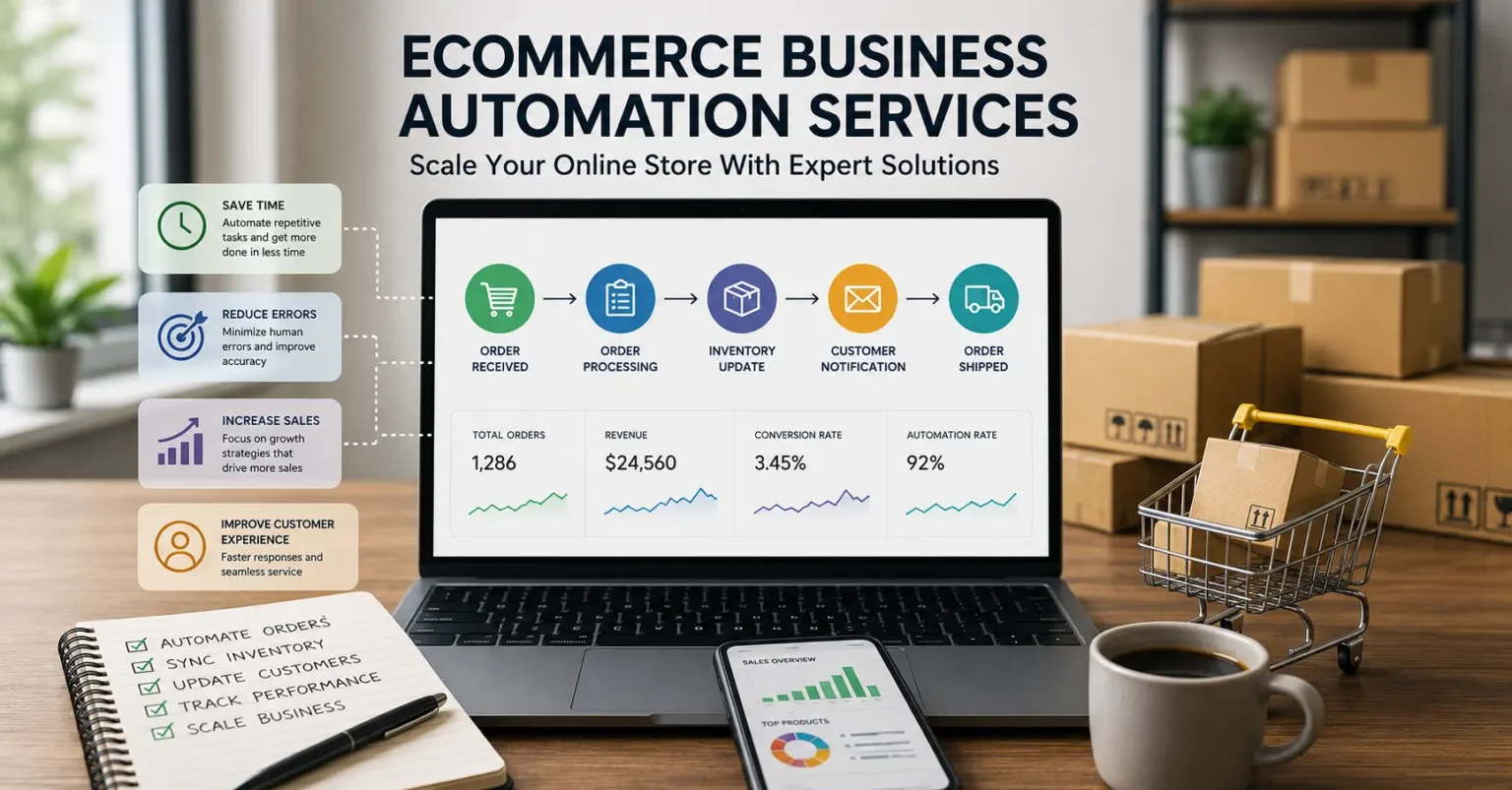
This was the first thing I handed over and honestly the relief was immediate. Payment comes in, order gets confirmed, packing slip generates, everything queues up without me needing to be at my desk. I remember the first Saturday morning I woke up and the overnight orders had already moved through the system cleanly. I just sat there with my coffee feeling slightly useless in the best possible way.
Stock Numbers Staying Accurate Everywhere at Once
I used to sell across two platforms and the overselling problem was a constant source of stress. Someone would buy the last unit on one store and for a window of time the other store still showed it as available. Ecommerce business automation services solved this in a way I hadn’t expected, because the fix wasn’t just faster updates, it was the fact that I stopped being the link in the chain that slowed everything down.
Customer Emails Going Out Without Me Writing Each One
This took me a while to trust. I kept feeling like automated emails would come across as cold or generic and customers would notice. What actually happened was the opposite. Emails went out faster, they were consistent, and customers stopped messaging to ask where their order confirmation was. The complaints I used to get about slow communication basically dried up.
How I Figured Out Which Service Actually Made Sense for My Store
There are more options in this space than most people realize, and early on I made the mistake of trying to compare everything at once, which just left me more confused.
I Started With Whatever Was Costing Me the Most Time
Instead of looking for the most advanced platform with the longest feature list, I sat down and timed myself for a week. Literally tracked where my hours were actually going. Turned out order processing and inventory syncing were eating about three hours a day. So that’s where I focused first when looking at ecommerce business automation services, not on the shiny stuff I didn’t urgently need.
Tested It on One Section of My Store Before Going All In
I picked my lowest risk product category, ran automation on just those listings for two weeks, and watched it carefully before trusting it with everything else. This was probably the smartest thing I did during the whole setup process. A couple of small issues came up that would have been genuinely messy at full store scale, but caught early they were easy fixes.
Checked How They Handle Support Before I Asked About Pricing
Sounds like the wrong priority, but I’d learned from a previous software experience that cheap with no support during a problem is actually more expensive in the long run. Before I asked about plans or pricing, I sent each shortlisted service a support question and timed how long it took to get a real response. That single test knocked two options off my list immediately.
Where I Went Wrong Before I Got the Hang of It
Turned on Too Many Things at the Same Time
There was a week where I launched three different automated workflows because I was excited and impatient. When a problem appeared a few days later I had no idea which workflow caused it and had to dig through everything manually to find the issue. Now I do one change, watch it for at least a week, then consider the next one.
Changed My Business Without Updating the Automation
I updated my delivery timeframes once and completely forgot to update the automated emails that were going out to every customer at checkout. For almost ten days customers were getting told one thing and experiencing something slightly different. It sounds minor but the trust damage from small inconsistencies like that adds up quickly.
Thought Automation Would Run Itself Forever Without Any Input
This was the biggest mindset mistake I made. Ecommerce business automation services take repetitive execution off your plate, they don’t remove the need for you to actually think about your business. Rules need updating when things change, workflows need reviewing, reports still need someone looking at them. The work shifts, it doesn’t vanish.
The Costs Involved and Whether It Was Worth It for Me
I want to talk about money for a second because I feel like most people writing about automation skip this part. It’s not free, and depending on the size of your store, monthly costs can add up. In my first month I was paying for tools I barely understood how to use yet, which felt wasteful.
But here’s the thing I worked out after about three months. I was spending roughly fifteen hours a week on tasks that automation now handles. When I put even a modest hourly value on my own time, the math stopped being a debate pretty quickly. The more useful way to think about it isn’t what automation costs you, it’s what not having it is already costing you in time, energy, and mistakes you don’t even realize are happening.
Start Small and Upgrade as You Grow
You don’t need the biggest plan on day one. Most services have entry level options that cover the basics, and those basics are usually enough to make a real difference in your daily workload. I started on the smallest plan available, stuck with it for four months, and only upgraded when I genuinely outgrew it rather than guessing what I’d need upfront.
What My Actual Days Look Like Now Compared to Before
Mornings Used to Start With a Pile of Catch Up
I used to open my laptop first thing and immediately feel behind. There were always overnight messages to reply to, orders to process, something that needed sorting before I could even think about anything else. That feeling of starting every day already running is exhausting in a way that’s hard to explain until you’ve lived it for a while.
Now I’m Actually Making Decisions Instead of Just Keeping Up
I’m not going to pretend automation fixed everything overnight, it didn’t. But after a couple of months the shift was obvious. I had time to actually think about where my store was going instead of just keeping it moving. New product ideas, better marketing angles, stuff I’d been putting off for over a year because there was never enough mental space to think clearly.
How to Know If You’re Ready to Look Into This
If your day is mostly made up of the same tasks repeated over and over, if mistakes are creeping in as your volume grows, and if the thought of taking a day off makes you anxious because things would pile up while you’re gone, those are all signs worth paying attention to.
A Weekend Off Without Your Store Falling Apart
This one is personal but I think it matters. The first weekend I took completely off after setting everything up, I kept reaching for my phone out of habit. Nothing needed me. Orders were processing, emails were going out, stock was updating. That small thing, one normal weekend with my family without a laptop nearby, made the whole setup process feel completely worth it.
Ecommerce business automation services aren’t a magic fix and they’re not something you set up once and forget about. But for a store that’s growing and a person who’s running out of hours in the day, they genuinely change what’s possible. Not because they do your job for you, but because they handle the parts of the job that never actually needed a human in the first place. That’s really what it comes down to.
Frequently Asked Questions
What exactly are ecommerce business automation services?
These are tools or platforms that handle the repetitive day to day tasks in your online store so you don’t have to do them manually. Things like processing orders, syncing inventory across multiple platforms, sending order confirmation emails, updating shipping status, and managing customer communication workflows all fall under this. The whole point is that these tasks happen automatically in the background while you focus on the parts of your business that actually need your attention and decision making.
Are ecommerce business automation services worth it for a small store?
Honestly yes, even if your store is small right now. Most people wait until they’re overwhelmed before looking into automation, but starting early means you build clean systems from the beginning instead of trying to fix messy ones later. Even basic automation like automatic order confirmations and inventory syncing saves a surprising amount of time every single week, and that time adds up fast over a few months.
How much do these services usually cost?
It really depends on the platform and how many features you need. Most services offer entry level plans that are reasonably affordable, and you can usually start small and upgrade only when your store actually needs more. The better way to think about cost is to calculate how many hours a week you’re spending on tasks automation could handle, and put a realistic value on that time. Most people find the math works out pretty clearly in favor of automating.
Will automation make my store feel less personal to customers?
This was something I worried about too when I first started. What actually happened was the opposite. Customers got faster responses, more consistent communication, and fewer mistakes in their orders. The personal touch doesn’t come from you manually typing every email, it comes from the quality of what you sell and how you handle the situations that genuinely need a human. Automation just makes sure the routine stuff never slips through the cracks.
What should I automate first in my ecommerce store?
Start with whatever is eating the most of your time right now. For most sellers that’s order processing and inventory updates, so those are usually the best place to begin. Don’t try to automate everything at once because if something goes wrong you won’t know what caused it. Pick one area, set it up carefully, watch it for a week or two, and then move on to the next thing once you’re confident it’s working properly.