
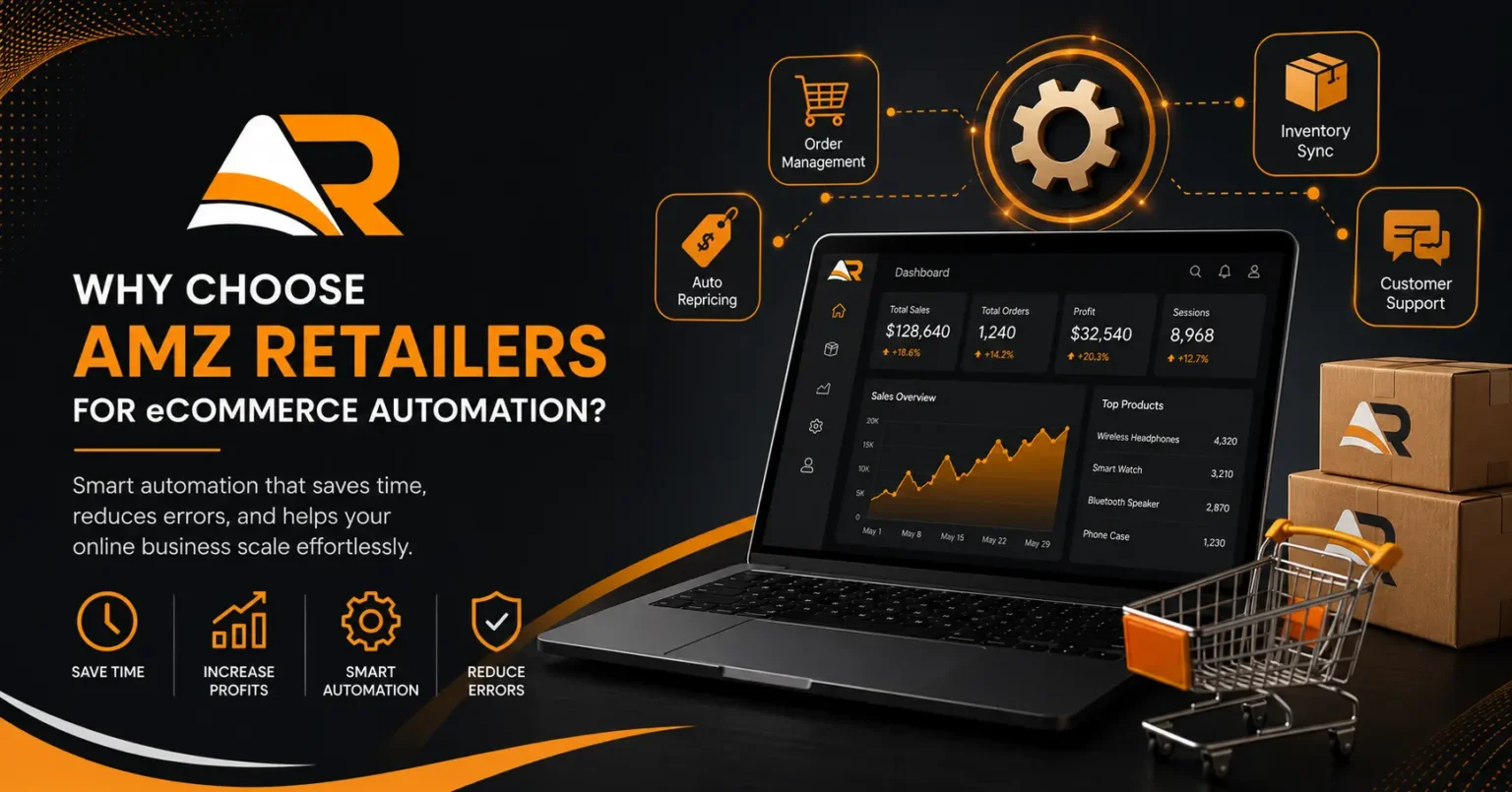
So here’s how this whole thing started for me. It was close to 1am, I had three tabs open trying to figure out why my inventory count didn’t match what was actually sitting in my storage unit, and out of pure frustration I typed “AMZ Retailers for eCommerce Automation” into Google. Not because I trusted some random service to save me. I was just done. Done doing spreadsheets at an hour when normal people are asleep.
You probably know this feeling if you sell online. Listings need updating, prices need watching, someone’s messaging you about a return at 11pm, and somewhere in the middle of all that you’re also supposed to, I don’t know, live a life? I did the manual thing for almost two years. Every price tweak, every stock check, every reorder call, all me, all by hand. I genuinely thought that was what “real” sellers did. Grind through it alone. Looking back now, that was kind of a dumb thing to believe, but nobody tells you that when you’re starting out.
What Automation Actually Means for Online Sellers
Can we talk for a second about how meaningless the word “automation” has become? Everyone says it. Nobody explains it. So plainly: in eCommerce it just means letting software take over the boring repetitive stuff, repricing, syncing stock, updating orders, instead of a human clicking through the same steps forty times a day.
When I first came across AMZ Retailers for eCommerce Automation, I braced myself for another overpriced dashboard I’d forget about by week three. I have a whole graveyard of those, honestly. Old subscriptions, half used, quietly draining my bank account. But this felt different pretty quickly. It wasn’t software waiting for me to babysit it. It felt more like it was built by people who’d actually lived through the mess of running a store, not just people who knew how to design a clean looking interface.
Here’s something that took me way too long to figure out. Sellers don’t usually fail because their products are bad. They burn out because they’re managing tasks that never needed a human touch in the first place. I learned this during a holiday sale I basically slept through, competitively speaking, because my prices weren’t adjusting fast enough while everyone else’s were.
Why Manual Management Doesn’t Scale
Nobody warns you about this bit either. Twenty listings, fine, you can update those by hand without losing your mind. Two hundred? That’s a different story entirely. I remember one specific week where updating prices manually across my whole catalog ate up nearly three hours. Three hours I could’ve spent literally anywhere else. Sourcing, resting, whatever.
Small stores can limp along on manual effort for a while. It’s growth that breaks everything. That’s roughly the point where AMZ Retailers for eCommerce Automation started quietly taking over the parts of my week that used to disappear into nothing.
The Real Reasons Sellers Are Switching
I’m not going to pretend this is some hidden secret. There are a bunch of automation platforms out there competing for your money. So why’d I end up here, and why do so many other sellers I talk to say the same thing?
Part of it, honestly, is who’s actually building the tool. A lot of these platforms come from people who are great at writing code but have never had a listing get suspended at 2am, or watched a competitor gut their prices right before a big sale weekend. This one felt like it came from people who’d been through that exact chaos themselves. You can kind of tell.
Support was the other thing. I’ve signed up for tools where week one gets you all the attention in the world and then, silence. Ghosted, basically. That didn’t happen here. I asked a pretty specific question once about how repricing rules worked with my particular product category, and I got an actual answer from an actual person, not a link to some generic FAQ I’d already read.
The time savings is really what sold me. I tracked my hours, a full month before switching and a full month after. Before: roughly 15 hours a week on manual store stuff. After: under 4. That’s not a small gap. That’s basically a part time job’s worth of hours I got back for myself.
Small Details That Make a Big Difference
It’s rarely the big flashy stuff that actually convinces you. It’s the annoying little problems quietly going away. Stock alerts that factor in how fast something’s actually selling, not some static “reorder at 10 units” rule that made no sense half the time. Order info sitting in one place instead of scattered across five tabs I’d inevitably forget to check. Customer messages sorted properly so nothing sits unread for three days.
None of that sounds like much on its own. Stack it together though, and it’s the difference between constantly putting out fires and having a business that mostly runs itself while you focus on things that actually matter.
How This Actually Plays Out Day to Day
Let me just describe a normal morning, old versus new, because I think it explains this better than anything else could.
Old morning: log into three different platforms, manually check stock levels, adjust prices based on whatever competitors did overnight, wade through a pile of customer questions. Usually took over an hour, and that’s before I’d even had coffee.
New morning: one dashboard. Most of it’s already handled from overnight. I step in only when something actually needs a human decision, a weird return request, a new product that hasn’t been folded into the automated pricing rules yet. Everything else just runs.
One thing really sealed the deal for me. A competitor slashed their prices during a flash sale, for about six hours straight. Old me would’ve completely missed that window. I’m not refreshing listings every single hour of my day, nobody is. But with repricing already automated, mine adjusted within minutes, no input from me at all. I actually outsold that competitor during that stretch. That one event alone probably paid for months of the service.
Common Concerns People Have Before Switching
I get the hesitation, I really do. Handing pricing decisions over to software sounds risky if you’ve never tried it. I felt exactly the same. What if it prices something too low and I lose money on it? What if something gets messed up with an order?
In practice it’s a lot less scary than it sounds. You set your own limits, minimum price, maximum price, and it operates inside those boundaries, nothing more. I never actually lost control of anything. I just stopped being the person manually clicking buttons every hour of every day.
Cost comes up a lot too, understandably. Why pay for something you could technically do yourself for free? And sure, you could. But your time isn’t free, even when it feels like it is. If you’re burning 15 hours a week on stuff that doesn’t need a human, that’s 15 hours not spent finding better products, talking to actual customers, or, honestly, sleeping enough to function like a normal person.
What I Wish I Had Known Earlier
If I could go back and tell myself one thing, it’d be this. Don’t wait until you’re totally fried to look into this. I waited almost two years, convinced that grinding through everything manually was some badge of honor. That belief nearly tanked my business, not from lack of effort, but from pouring all my effort into the wrong stuff.
Switching to AMZ Retailers for eCommerce Automation earlier would’ve saved me a lot of stress, a handful of missed sales, and honestly, sleep I’m never getting back. There’s no prize for suffering through spreadsheets at midnight. The prize is a business that keeps growing instead of one that’s just barely staying alive.
Is This the Right Move for Every Seller?
I want to be honest instead of just selling you a nice story here. Automation isn’t going to fix a business that’s got deeper issues, bad suppliers, products nobody actually wants, that kind of thing. If your foundation’s shaky, automating just means you fail a bit faster and more efficiently. Not really a win.
But if your products are solid and the model already works, automation clears out the operational clutter that’s been slowing you down. It moves your energy away from busywork and toward actual strategy, the stuff that genuinely moves the needle for your business.
For sellers trying to push past that scrappy early stage, this kind of support makes a real difference. It’s not about cutting corners or being lazy about it. It’s about being realistic with your time, especially if you’re running this solo, or with just one or two other people and never enough hours in the day.
Final Thoughts
Running an online store doesn’t have to mean drowning in the same repetitive tasks day after day. For years I bought into this idea that hustle meant doing literally everything yourself, and it took actual burnout before I realized that wasn’t sustainable, or even smart, really. Choosing AMZ Retailers for eCommerce Automation didn’t just give me my schedule back. It gave me the mental space to actually think about where my business was headed, instead of just scrambling to keep it upright.
If you’re still on the fence, try this. Sit down, actually track how many hours you’re spending on repetitive tasks in a week, then think honestly about what your time’s worth. The math tends to make the decision pretty clear on its own. It did for me, anyway.
At the end of the day, none of this is about chasing some shiny tech trend because it sounds impressive. It’s about running your business in a way that actually respects your time and energy, so there’s room left for the parts of selling online you got into this for in the first place.