
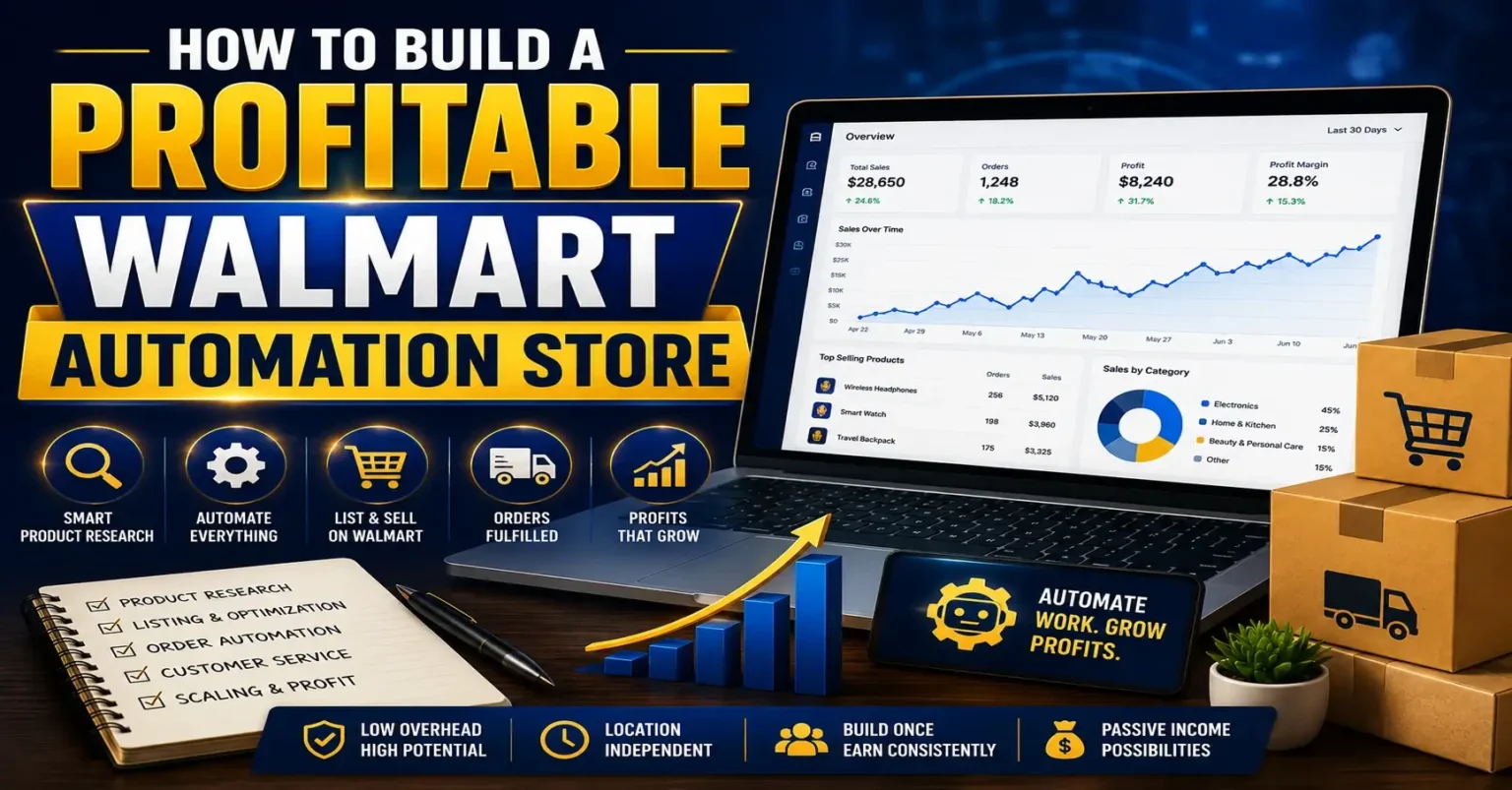
A couple of years ago a friend of mine told me he was making consistent monthly income from an online store he barely touched anymore. He had built a walmart automation store and handed the day to day operations over to a team that handled everything from product research to order fulfillment. I thought he was exaggerating. He was not. That conversation sent me down a rabbit hole that completely changed how I thought about ecommerce and passive income. Building a profitable automated Walmart store is not a myth but it is also not as simple as some people on the internet make it sound. This post is my honest breakdown of how it actually works, what it takes to get there, and what nobody tells you before you start.
What Is a Walmart Automation Store and How Does It Work
Before anything else it helps to understand what this model actually is because the word automation gets thrown around in ecommerce in a lot of different ways that mean very different things.
A Walmart automation store is a Walmart Marketplace seller account where the core business operations are handled either by a hired team, a done for you service, or a combination of software tools and virtual assistants. The store owner provides the capital and oversight while other people or systems handle product sourcing, listing creation, inventory management, pricing, and customer service.
The underlying business model is typically dropshipping or wholesale. In the dropshipping version you list products on Walmart Marketplace without holding inventory. When a customer places an order you purchase the item from a supplier who ships directly to the customer. In the wholesale version you source products in bulk at lower prices and resell them at a profit on Walmart. The automation layer sits on top of whichever fulfillment model you choose and handles the repetitive operational tasks that would otherwise consume your time every single day.
Why Walmart Marketplace and Not Just Amazon
A lot of people ask this question and it is a fair one. Amazon is bigger and more well known but Walmart Marketplace has become genuinely compelling for sellers over the last few years for a few specific reasons.
Walmart’s marketplace is less saturated than Amazon. There are fewer sellers competing for the same product listings which means it is often easier to win the buy box and make consistent sales. Walmart also has enormous built in traffic from its existing customer base and its integration with the physical store network gives it a trust factor that newer marketplaces cannot match. And because fewer experienced sellers are operating on Walmart compared to Amazon, the competition for many product categories is significantly softer.
Setting Up Your Walmart Seller Account the Right Way
Getting approved as a Walmart Marketplace seller is not automatic. Walmart is selective about who it lets onto the platform and understanding what they are looking for makes the application process much smoother.
What Walmart Looks For in a Seller Application
Walmart wants to see that you are a legitimate business. That means you need a registered business entity, a US business address, a US business bank account, and a tax identification number. They also look at your ecommerce track record. If you have selling history on Amazon, eBay, Shopify, or any other platform that demonstrates you can handle orders professionally and maintain good customer satisfaction metrics, include that in your application.
Walmart reviews applications manually and the process can take anywhere from a couple of weeks to a couple of months. Having a clean, professional application with clear information about what you plan to sell and evidence of prior ecommerce experience speeds things up considerably.
The Walmart Seller Center
Once approved you will operate everything through Walmart Seller Center which is their version of Amazon Seller Central. This is where you manage listings, track orders, monitor performance metrics, and handle customer communications. Spend time getting familiar with the interface before you start building out your store because understanding how everything connects makes the automation setup much more logical later on.
Choosing the Right Business Model for Your Walmart Automation Store
This decision shapes everything else about how your store operates, what your startup costs look like, and what your profit margins will be. Getting clear on this early saves a lot of confusion down the road.
Walmart Dropshipping
Dropshipping on Walmart means listing products without buying them upfront. When a sale comes in you place an order with your supplier and they ship directly to the customer under your store name. The appeal is obvious. Low upfront investment, no inventory risk, and the ability to list thousands of products quickly.
The challenge with Walmart dropshipping is that Walmart has strict policies around where products can be sourced from. You cannot dropship from other retail websites like Amazon or Target. Walmart explicitly prohibits retail arbitrage dropshipping and if they catch orders being fulfilled this way your account can be suspended. Legitimate dropshipping on Walmart uses wholesale suppliers, authorized distributors, or manufacturers as the source.
Walmart Wholesale and Private Label
Buying wholesale means purchasing products in bulk from distributors or manufacturers at a discounted price and reselling them on Walmart at a margin. This requires more upfront capital but offers better profit margins, more control over inventory, and a business model that Walmart fully supports without policy concerns.
Private label takes this a step further by sourcing products manufactured to your specifications and selling them under your own brand. This is the highest effort and highest reward approach and it is where the most durable long term businesses on Walmart Marketplace get built.
Which Model Works Best With Automation
Wholesale and authorized dropshipping both lend themselves well to automation because the supplier relationships are stable and the processes are repeatable. Once you have established suppliers, clear pricing rules, and fulfillment workflows in place, a team or software can manage most of the daily operations without your constant involvement. Private label requires more hands on attention especially in the early stages but can also be automated once the brand is established.
Building the Automation System That Actually Runs Your Store
This is the part that most guides skip over or treat too vaguely. The automation does not happen by itself. You have to build the system that makes it possible and that takes deliberate effort upfront.
Software Tools That Handle the Heavy Lifting
There are several tools specifically built for Walmart Marketplace sellers that automate the most time consuming tasks.
Pricing automation tools like Informed Repricer or Wiser automatically adjust your prices based on competitor pricing, buy box status, and rules you define. Instead of manually checking prices every day the software does it continuously and keeps your listings competitive without you lifting a finger.
Inventory management software tracks your stock levels and syncs them with your supplier feeds so you are never selling products that are out of stock. This is critical because Walmart penalizes sellers for cancellation rates caused by inventory issues and those penalties can damage your account health score.
Listing tools help you create and optimize product listings at scale. Instead of building each listing manually these tools pull product data from supplier catalogs and format it according to Walmart’s listing requirements.
Building Your Virtual Assistant Team
Software handles a lot but not everything. The human side of your automation team typically includes a product researcher who identifies profitable items to list, a listing specialist who creates and optimizes your product pages, a customer service representative who handles buyer messages and return requests, and an account manager who monitors your store health metrics and flags anything that needs your attention.
Finding good virtual assistants for a walmart automation store used to require a lot of trial and error. Platforms like Upwork, Onlinejobs.ph, and Freeeup have made it more straightforward. The key is hiring people who have specific Walmart Marketplace experience rather than general ecommerce experience because the platform has its own quirks and policies that take time to learn.
Done For You Automation Services
If building your own team sounds like too much work there is a whole industry of done for you walmart automation store services that claim to set up and manage everything on your behalf. These services take a share of your profits or charge a monthly management fee in exchange for handling operations.
The results from these services are genuinely mixed. Some are legitimate operations run by experienced Walmart sellers who deliver real results. Others are closer to expensive promises that underdeliver. If you go this route, research the service extensively, ask for verifiable references from existing clients, and make sure the contract clearly defines what they are responsible for and what happens if performance targets are not met.
Product Research for a Walmart Automation Store
The products you choose to sell determine almost everything about whether your store succeeds. This is not an area where you want to cut corners or delegate too early.
What Makes a Good Walmart Product
Good products for Walmart Marketplace share a few common characteristics. These products have consistent demand without extreme seasonality. Ideally, they should not be dominated by a single brand that controls most of the market. Most importantly, the profit margin should remain healthy after Walmart’s referral fee and your cost of goods, leaving enough profit on each sale. And they have room for a new seller to win some portion of sales without needing thousands of reviews or an established brand reputation.
Walmart’s referral fees vary by category but typically range from 6 to 15 percent of the sale price. After that fee and your cost of goods you want to be left with at least 15 to 20 percent net margin to make a product worth listing. Anything tighter than that and a small price war or a shipping cost increase can wipe out your profit entirely.
Tools for Finding Winning Products
Helium 10 now has Walmart specific features that let you research product demand, competition levels, and estimated sales volumes on Walmart Marketplace. Jungle Scout also covers Walmart data. These tools are not perfect but they give you a data driven starting point instead of relying purely on instinct.
Supplier catalogs are another underused research tool. If you have access to a wholesale distributor’s catalog you can cross reference their products against what is already selling on Walmart and identify gaps where demand exists but competition is limited.
Understanding Walmart’s Performance Metrics and Why They Matter
Walmart tracks seller performance closely and your standing on the platform affects everything from your listing visibility to whether you keep your account at all. This is not something you can set up your automation around and then ignore.
The Metrics Walmart Watches
Walmart measures sellers on several key performance indicators. Your order defect rate needs to stay below 2 percent. This metric captures negative feedback, chargebacks, and claims from customers about orders that went wrong. Your on time shipment rate needs to stay above 99 percent which sounds strict because it is. Your listing quality score affects how visible your products are in Walmart search results. And your cancellation rate needs to stay very low because cancellations hurt customer trust and Walmart treats them seriously.
How to Keep Your Metrics Healthy Through Automation
The good news is that a well-built automation system can protect your metrics more effectively than manual management. Software does not forget to update inventory. It also does not miss important repricing opportunities. However, success depends on proper setup from the beginning. Your tools must be configured correctly. In addition, your virtual assistant team should follow clear processes. This helps them identify and resolve issues before they affect your metrics dashboard.
Set up regular weekly reviews of your performance metrics even if everything else is automated. This is one area where your own eyes on the numbers matter. Catching a metric that is trending in the wrong direction early gives you time to identify the cause and fix it before it becomes an account threatening problem.
How Much Money Do You Need to Start a Walmart Automation Store
This is usually the first question people ask and the honest answer is that it depends significantly on which business model you choose and how much of the operation you plan to automate from day one.
Startup Cost Breakdown
For a dropshipping model with authorized suppliers your startup costs are relatively low. You need your business registration costs which vary by state but are typically between 50 and 500 dollars. Software tools for repricing and inventory management run between 100 and 300 dollars per month depending on which ones you use. If you hire virtual assistants expect to budget between 500 and 1500 dollars per month for a basic team. And you need working capital to cover the gap between when you purchase from suppliers and when Walmart releases your payment, which typically takes about two weeks after a sale.
For a wholesale model add the cost of your initial inventory purchase on top of everything else. A reasonable starting inventory investment for a new wholesale seller is somewhere between 3000 and 10000 dollars depending on the products you choose and how many listings you want to launch with.
If you go the done for you service route, setup fees can range from 5000 to 30000 dollars upfront plus ongoing profit sharing or management fees. These numbers vary widely between providers so get multiple quotes and understand exactly what is included before you commit.
Realistic Profit Expectations
I want to be straight with you about this because there is a lot of unrealistic income talk around ecommerce automation. A well run walmart automation store with a solid product selection and a competent team can generate meaningful monthly profit but it rarely happens in the first few months. Most stores take three to six months to find their footing, build up enough listings, and generate consistent sales volume.
A realistic monthly net profit for a successful store can range from $500 to $3,000 during the first year. Actual results depend on your investment level and product performance. Stores with strong supplier relationships often perform better over time. Those that have been operating for two or three years can generate significantly higher profits. However, these results come from consistent effort and gradual growth. They are not the result of overnight success.
Common Mistakes That Kill Walmart Automation Stores Early
I have talked to enough people who tried this and failed to see some clear patterns in what goes wrong. Most of these mistakes are avoidable if you know to look out for them.
Ignoring Walmart’s Policies
Walmart’s seller policies are not suggestions. Violating them, even unknowingly, can result in account suspension and getting a suspended Walmart account reinstated is a slow and painful process with no guaranteed outcome. Read the seller agreement thoroughly. Understand what sourcing methods are and are not allowed. Know the rules around product listings, image requirements, and shipping commitments. Building your walmart automation store on a foundation of policy compliance protects everything you are building.
Underfunding the Business
Starting with too little capital is one of the most common reasons new stores struggle. Ecommerce businesses eat cash in the early months before they generate consistent sales. Starting with insufficient capital can create serious challenges. It often forces you to make reactive decisions instead of strategic ones. You may also cut corners on your team, software, or essential tools. As a result, you can miss profitable product opportunities. Without enough working capital, it becomes difficult to move quickly when the right opportunity appears.
Hiring the Wrong People or Service
The team you build around your store is ultimately what determines how well the automation actually works. Hiring virtual assistants with no Walmart experience is a common mistake. Many store owners expect them to learn everything on their own. This often leads to listing errors, policy violations, and poor customer service. Another costly mistake is signing up with a done-for-you service without proper research. A lack of due diligence can cost you tens of thousands of dollars. In many cases, there is very little to show for the investment.
Take your time with hiring. Test people with small paid tasks before committing to ongoing work. Ask specific questions about their Walmart experience and verify what they tell you.
Final Thoughts
Building a profitable walmart automation store is genuinely possible and there are real people doing it successfully right now. But it is a real business that requires real capital, real decisions, and real oversight even when most of the operations are handled by someone or something other than you.
The people who succeed with this business model understand what it takes to win. They invest in the right systems and build a reliable team from the start. They also monitor their metrics closely and address problems before they become serious. Most importantly, they give the business enough time to grow before expecting substantial returns.
Walmart Marketplace offers a strong opportunity in 2026 for those willing to treat it like a real business. It is not a passive income shortcut. The platform continues to grow, and competition remains more manageable than on Amazon. At the same time, the tools and infrastructure needed to automate a store are more accessible than ever.
Do your research, start with the right model for your budget, build your systems carefully, and give it the time it needs to work.